
Key takeaways
- Almost every modern heating system stops when the power goes out, including gas furnaces: the igniter, inducer fan, control board and blower are all electric.
- Front Range outages are no longer just storm outages. Xcel Energy has used planned Public Safety Power Shutoffs during high fire danger, including on December 17, 2025, when nearly 100,000 Coloradans west and north of Denver lost power at the peak.
- Generators save the day only when used safely: outdoors, at least 20 feet from doors, windows and vents, and connected to a furnace only through a proper transfer switch.
- Heat pumps need patience after a long outage. Some manufacturers ask for hours of crankcase-heater warm-up before the compressor runs in the cold.
- Protect the pipes: drip faucets, open sink cabinets and know where the main water shut-off is.
Colorado winters bring two kinds of outages: the familiar ones from heavy snow, ice and wind damage, and the planned kind. Since 2024, Xcel Energy has shut off power ahead of extreme wind and fire weather, cutting service to tens of thousands of customers in Boulder, Jefferson, Larimer, Weld and Clear Creek counties at a time. Restoration can take hours or days, because crews must inspect the lines before turning them back on. This guide covers what happens to your heating system, how to keep the house and the pipes safe, and how to restart everything when the lights come back.
Why your heat stops when the power does
A gas furnace burns gas, but it can’t start or run without electricity. The control board decides when to fire; the inducer fan pulls combustion gases out through the vent; the hot-surface igniter lights the burners; a flame sensor proves the flame; and the blower moves the heat through the ducts. Lose power and the whole sequence stops. Boilers lose their circulator pumps, and heat pumps and mini-splits are fully electric.
A few appliances can keep going. Many gas fireplaces with a standing pilot (millivolt controls) run without household power, though the fan won’t. Wood stoves need no electricity. Gas water heaters with a standing pilot usually keep working, while power-vent and tankless models stop. Check your owner’s manuals now, while you have the lights on.
Before an outage: a 30-minute prep
- Sign up for alerts. Xcel sends calls, texts and emails before a planned shutoff and posts updates online; make sure your contact info is current. Customers who rely on electric medical equipment can enroll in Xcel’s medical programs for earlier notice.
- Test your CO alarms and replace batteries. Outages are when people bring generators and heaters into the picture, which is exactly when CO risk rises.
- Locate the main water shut-off and the furnace’s service switch (normally a switch mounted on or beside the furnace).
- Bank the heat. If a shutoff is announced, warm the house a couple of degrees above normal beforehand and close blinds after dark.
- Decide on backup heat. A safe, listed portable heater for a generator, a wood stove, or a plan to stay elsewhere. For a whole-home generator or a furnace hookup, talk to a licensed electrician about a transfer switch or interlock.
During the outage
- 1CO alarms
Working alarms on every level and outside bedrooms.
- 2Thermostat
Turn it off or down so equipment doesn’t restart on a flicker.
- 3One warm room
Close doors, block drafts, use daytime sun.
- 4Pipes
Drip faucets, open cabinets, know the main shut-off.
- 5Generator outside
20+ feet from openings; transfer switch for the furnace.
- 6Power back
Wait for stable power, check breakers, then restart heat.
- 7Heat pump
Follow the manual; some need hours of warm-up first.
Keep the heat in
Pick one or two rooms to live in, ideally on the sunny side, and close doors to the rest. Hang blankets over doorways, stuff towels under exterior doors, open south-facing blinds during the day and close everything at night. A well-built house can hold a reasonable temperature for many hours, a drafty one much less.
Protect the pipes
The American Red Cross recommends letting faucets drip, opening sink cabinets on outside walls so room air reaches the pipes, and wrapping exposed pipes. If you leave, it advises keeping the heat no lower than 55°F, which isn’t possible during an outage, so if a long outage is forecast in deep cold, consider shutting the main water valve and draining the lines. Never thaw pipes with an open flame.
Generators, done right
- Place portable generators outdoors, at least 20 feet from doors, windows and vents, the distance the CDC recommends, and never in a garage, even with the door open.
- Run appliances from the generator with heavy-duty outdoor cords. Do not plug a generator into a wall outlet (“backfeeding”); it can electrocute utility crews and neighbors.
- To run the furnace on a generator, the furnace circuit should be connected through a transfer switch or interlock installed by a licensed electrician. Furnace control boards are sensitive to voltage and polarity; an inverter-type generator gives cleaner power.
- Most furnaces draw a modest load (the blower is the biggest part), but it varies by model. Check the rating plate or ask before sizing a generator.
When the power comes back
- Wait a few minutes. Restoration sometimes flickers. Leave the thermostat off or set low until power is stable.
- Check breakers and the furnace switch. Surges can trip breakers. Reset a tripped breaker once; if it trips again, leave it off and call.
- Thermostat. Smart thermostats reboot and may lose schedules or Wi-Fi. Battery models may need fresh batteries.
- Furnace. Set HEAT and raise the setting. It should start within a few minutes. If it doesn’t, note the LED code (see furnace error codes) and check the outdoor PVC vents for snow.
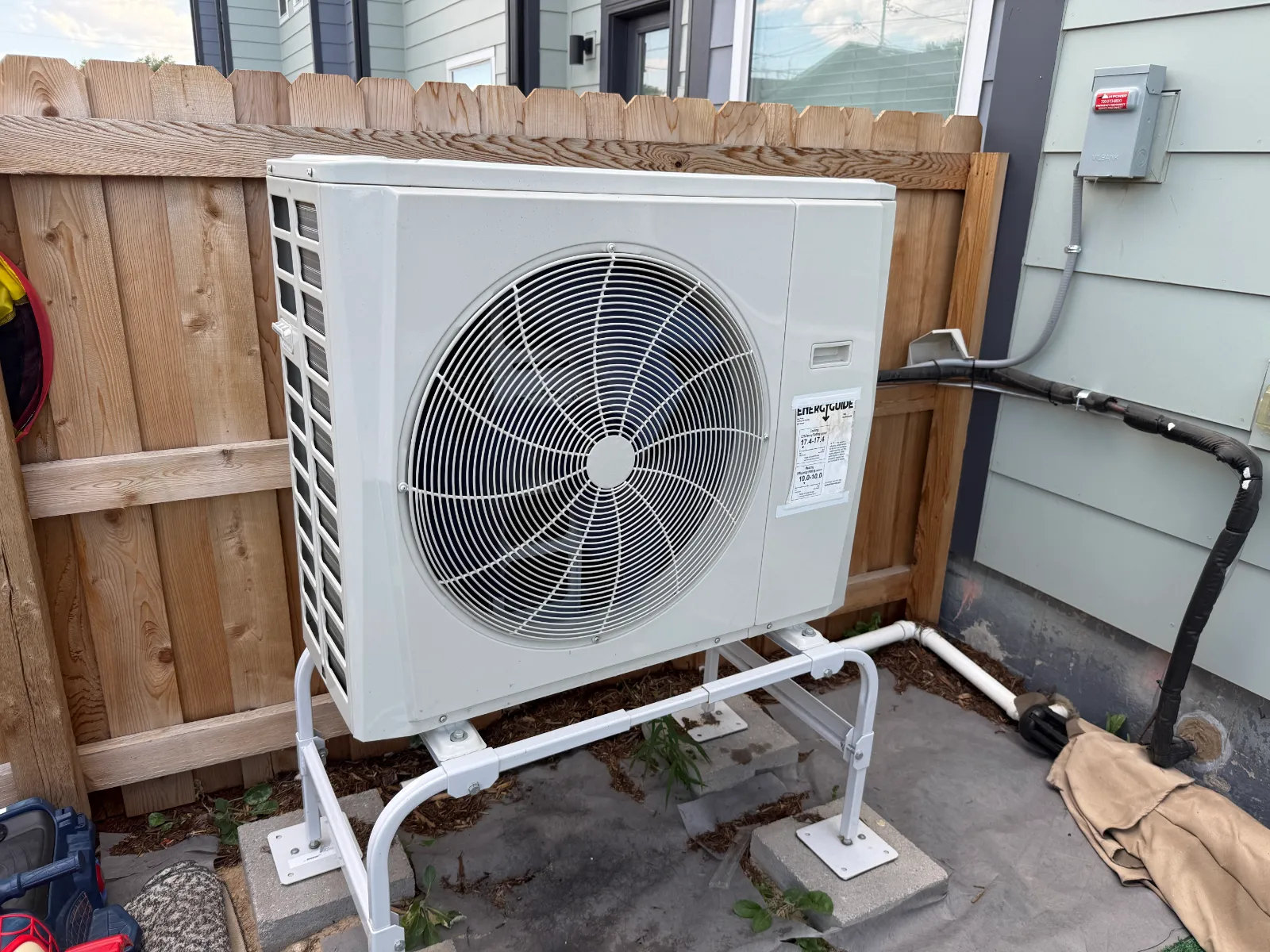
- Heat pump. Follow your manual. For example, an Allied heat pump manual tells owners to use emergency heat after an outage of several hours and to wait for a six-hour crankcase warm-up before returning to normal heat pump operation. The heater keeps liquid refrigerant out of the compressor oil in the cold.
- Gas appliances that went out. If a gas appliance or service was shut off at the meter, don’t relight it yourself; Xcel Energy advises calling them to check the meter and appliances.
Colorado specifics
Public Safety Power Shutoffs (PSPS)
Xcel uses PSPS events when very strong winds, low humidity and dry vegetation combine, often under National Weather Service red-flag warnings. The April 6, 2024 event cut power to about 55,000 customers; the December 17, 2025 shutoff affected roughly 100,000 people at its peak, with forecast gusts near 90 mph. Xcel’s newer protocol starts public messaging about 72 hours ahead when it can, so a planned shutoff usually gives you time to prepare.
Snow-covered vents after a blizzard
Big upslope storms can bury low PVC intake and exhaust pipes. When power returns the furnace may try to start and lock out on its pressure switch. Clear the pipes by hand before resetting it.
Foothills and long driveways
Homes in Evergreen, Morrison, Golden and the canyons often face the longest restorations and the coldest nights. A wood stove or a properly installed standby generator is worth considering there; so is a gas fireplace that runs without power.
When to call a pro
- The furnace won’t start after power returns, or shows a lockout code.
- A breaker trips again after one reset.
- The heat pump’s outdoor unit is iced solid or makes grinding sounds after the outage.
- You want a generator connection for your furnace: an electrician installs the transfer switch, and we can confirm the furnace’s electrical needs and settings.
- Any gas smell or CO alarm: leave first, then call.
Need help getting the heat back after an outage? MrFixer offers emergency HVAC repair, furnace repair and heat pump repair for homes throughout the Denver metro; reach us at (720) 466-7983.
Sources (6)
- coloradopolitics.com coloradopolitics.com/2025/12/17/xcel-shuts-off-power-west-of-denver-nearly-100k-coloradans
- boulderreportinglab.org boulderreportinglab.org/2025/07/22/after-last-years-chaotic-wildfire-power-shutoff-xcel-pr
- cdc.gov cdc.gov/natural-disasters/psa-toolkit/avoiding-carbon-monoxide-poisoning.html
- daytondailynews.com daytondailynews.com/news/local/cold-blast-expected-next-week-here-what-some-people-are-doi
- manuals.online manuals.online/allied/heat-pump/ml14xp1/user-manual/yjqp
- longmontleader.com longmontleader.com/local-news/cold-weather-and-snow-moving-into-colorado-8089235
We'll measure the house, run a load calculation and give you written prices for each option before any work starts.
Get a Free Estimate or call (720) 466-7983