
Key takeaways
- It may just be waiting. Most thermostats keep the compressor off for up to five minutes after it last stopped and show "Wait" or a blinking "Cool On" in the meantime.
- A central AC needs two power supplies: the indoor furnace or air handler that runs the blower, and a separate 240-volt circuit for the outdoor unit. Check both breakers and the furnace's own on/off switch.
- A full drain pan shuts cooling off on purpose. A float switch stops the system when condensate backs up, so a silent AC can really be a plumbing problem.
- Reset a tripped breaker once, not twice. If it trips again, leave it off. Repeat trips mean an electrical or compressor fault.
- Colorado culprits: cottonwood fluff packed into the outdoor coil, hail damage, and an outdoor breaker that was switched off for the winter.
You set the thermostat to Cool on the first hot afternoon and nothing happens: no click, no hum from the side yard, no air from the vents. Many "dead" air conditioners are really being held off by a timer, a breaker or a safety switch. Here is what to check, fastest answers first, and where homeowner checks end.
Is it safe? When to shut it off
Set the thermostat to OFF and leave the system off if you notice any of these:
- A burning, hot-plastic or electrical smell, smoke, or scorch marks near the furnace, air handler or outdoor unit.
- A breaker that trips again after you have reset it once.
- Loud humming or buzzing from the outdoor unit while its fan sits still.
- Water reaching wiring, the furnace cabinet or an outlet.
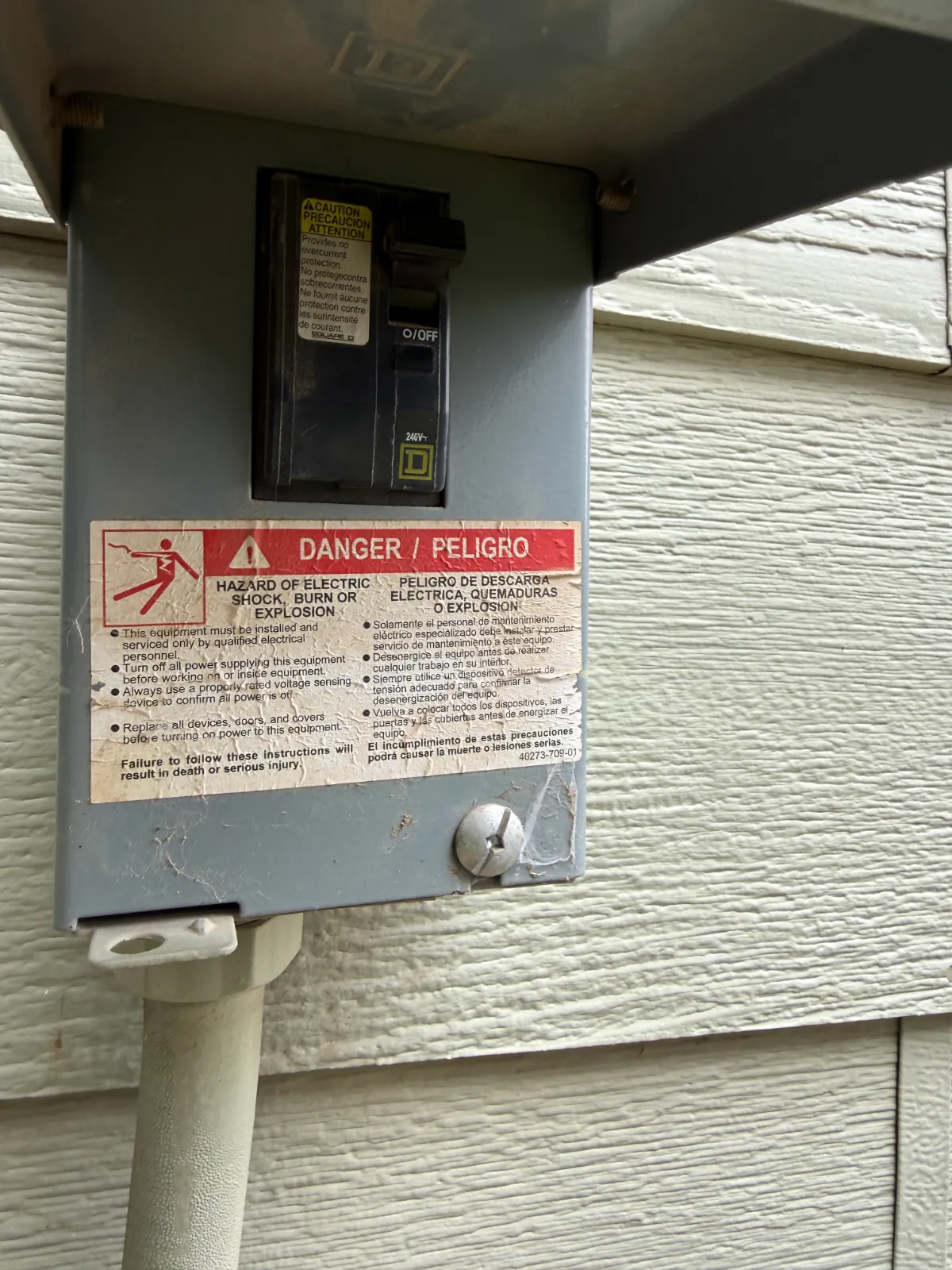
If there is smoke or a burning smell you can't trace, get everyone out and call 911. Never remove the cover of the outdoor disconnect box, the service panel on the condenser or the control compartment of the furnace. Capacitors inside can hold a dangerous charge even after the power is off, and safety switches should never be jumped or bypassed.
Symptom checker
| What you notice | Likely cause | DIY or pro |
|---|---|---|
| Blank thermostat display | Dead batteries, tripped furnace breaker or switch, blown low-voltage fuse | DIY: batteries and breaker. Pro: fuse or wiring |
| Screen shows "Wait" or "Cool On" is blinking | Built-in compressor delay after a recent stop or power blip | DIY: wait five minutes |
| Nothing runs, indoors or out | Indoor breaker, furnace service switch, blower door not latched, or float switch tripped | DIY to check; pro if it won't reset |
| Indoor fan runs, outdoor unit stays quiet | Outdoor breaker or disconnect, failed capacitor or contactor | DIY: breaker only. Pro: everything inside the unit |
| Outdoor unit hums or buzzes, fan won't spin | Weak capacitor, seized fan motor or compressor trouble | Pro. Turn it off now |
| Standing water in the pan under the indoor coil | Clogged condensate drain has tripped the float switch | DIY at the drain outlet; pro if the clog is inside |
| Starts, then quits after a few minutes | Outdoor coil clogged with cottonwood or dirt, frozen indoor coil, or a high-pressure safety trip | DIY: rinse coil, change filter. Pro if it repeats |
| Breaker trips again right away | Short circuit, failing compressor or motor | Pro only |
- 1Thermostat
Mode on Cool, setpoint 3+ degrees below room temperature, fresh batteries, app settings.
- 2Wait 5 minutes
"Wait" or blinking "Cool On" is the compressor delay.
- 3Two breakers
Indoor unit and outdoor unit. Reset once only.
- 4Furnace switch and door
Service switch on, blower door latched.
- 5Drain pan
Standing water means the float switch has stopped cooling.
- 6Outdoor unit
Look for cottonwood, hail damage, debris. Don't open the disconnect.
- 7One clean restart
Thermostat off, breaker off 30 minutes, then back to Cool.
- 8Call a technician
Repeat trips, humming unit, capacitor, contactor, board or compressor.
Step-by-step checks
1. Read the thermostat carefully
Confirm the mode says Cool and the setpoint is at least three degrees below the room temperature. A thermostat set to Heat, Off or Auto with a high cooling setpoint will sit idle. Replace the batteries if your model uses them; a dim or blank display is the giveaway. Smart thermostats can lose Wi-Fi after an outage or hold a forgotten "away" setting, so check the app. Bryant's homeowner guidance adds a sensible limit: if the thermostat still won't respond, leave the wiring alone and call a dealer.
2. Give the compressor delay five minutes
Honeywell explains that its thermostats hold the compressor off for a few minutes after it shuts down, to keep it from restarting under pressure, and that the wait can last up to five minutes. During that time the display may read "Wait" or flash "Cool On." If you have just changed the setting, turned the system off and on, or had a flicker in the power, give it the full five minutes before doing anything else. If the message is still flashing well past that, Honeywell suggests having a contractor check the voltage and look for a shorted wire.
3. Check both breakers
Look for one breaker for the furnace or air handler and a larger double breaker for the outdoor unit. A tripped one may sit in the middle position. Push it firmly to OFF, then back to ON, one time. If it snaps off again, stop there. A second trip points to an overload or short.
4. Check the furnace switch and blower door
In most Denver homes the AC shares the furnace's blower and control board. A wall-mounted service switch near the furnace, often mistaken for a room light switch, cuts power to all of it. People flip it off by mistake while changing a filter or storing boxes. Also make sure the lower blower door is pushed in and latched: a door switch behind it kills power when the panel is loose.
5. Look for water in the drain pan
The indoor coil sits above the furnace or inside the air handler with a drain pan under it. Many systems have a float switch, either in the pan or on the drain line, that opens when water rises and shuts off cooling. Bryant lists a clogged condensate drain or an activated float switch among the common reasons an AC won't start. If you see standing water, the AC is protecting your ceiling or floor. Soak up what you can, and check where the drain line ends (a floor drain, a laundry sink or a small condensate pump) for a visible clog. Don't open the coil cabinet or tape the float switch down to get cooling back. Our guide to water leaks around the AC and furnace covers drain lines and pumps in detail.
6. Walk out to the outdoor unit
From outside, look without touching anything electrical:
- Is the disconnect box on the wall next to the unit closed and intact? Some have a pull-out block or a lever. If it looks like someone pulled it, call a technician rather than reinserting it yourself.
- Is the coil matted with cottonwood fluff, grass clippings or leaves? A clogged coil can trip the unit's high-pressure safety and make it shut down soon after starting.
- Is there hail damage, a bent fan blade or debris inside the fan grille?
- Is there at least two feet of open space around the unit? The U.S. Department of Energy recommends keeping plants trimmed back that far for airflow.
7. Do one clean restart
If everything above checks out, a single power reset sometimes clears a confused control board. Bryant's method: set the thermostat to Off, switch off the breaker, wait about 30 minutes, restore power, then set the thermostat back to Cool. Do this once. If the AC still won't run, or runs and then stops again, it is time for a technician.
8. Check the filter
A dirty filter rarely stops an AC from starting, but it can freeze the indoor coil. Swap it if it looks clogged. If you find ice on the copper lines or coil, read our frozen coil guide before restarting.
Colorado specifics
The breaker you turned off last fall
Plenty of Front Range homeowners switch off the outdoor unit's breaker for the winter. That's fine, but many compressors have a small crankcase heater that keeps refrigerant from settling in the oil while the unit sits. Trane's guidance for compressors with crankcase heaters is to have them powered for at least 24 hours before the compressor starts. The practical version: switch the outdoor breaker back on a day before you expect to need cooling, with the thermostat still set to Off or Heat. Denver's average last freeze is around May 5, according to the National Weather Service, so early May is a good time to do it.
Cottonwood season
Late spring cottonwood fluff gets pulled into the outdoor coil and forms a felt-like mat. The unit can't shed heat, pressure climbs, and the system may trip off on a safety or run without cooling. With the thermostat off and the outdoor breaker switched off, rinse the coil gently from the outside in with a garden hose. Skip the pressure washer, which flattens the fins. If the mat is deep or the coil looks greasy, our coil cleaning service can clean it properly.
Hail and summer storms
Front Range hail can crush coil fins, crack fan blades and damage wiring on top of the unit. Afternoon thunderstorms also bring short power outages that reset thermostats and occasionally take out a control board. If your AC stopped after a storm, look for physical damage from a safe distance and read our hail damage guide before restarting it.
Altitude
Thinner air at Front Range elevations makes outdoor fans and compressors work harder on hot days, so a marginal capacitor or motor often fails on the first heat wave. Our altitude guide has more.
When to call a technician
Call for air conditioner repair if:
- A breaker trips a second time, or a fuse in the disconnect may be blown.
- The indoor fan runs but the outdoor unit stays silent after the breaker checks out.
- The outdoor unit hums, clicks repeatedly or buzzes without the fan spinning.
- The float switch keeps tripping after you've cleared the drain outlet.
- The thermostat is blank even with new batteries and the furnace switch on.
Capacitors, contactors, fuses, control boards and compressors are technician work: they involve high voltage and stored charge. If the AC turns out to be near the end of its life, our Denver HVAC system cost guide lays out the replace-or-repair decision. For an outage during a heat wave, especially with older adults or infants at home, use our emergency HVAC repair line. A spring tune-up catches weak capacitors and dirty coils before the first 90-degree day. Not sure if we cover your town? See our service areas.
AC still silent? Call MrFixer Heating & Cooling at (720) 466-7983. Telling us what the thermostat shows and whether the indoor fan runs speeds up the diagnosis.
Frequently asked questions
Why won't my AC start when the thermostat says Cool?
The most common reasons are the thermostat's built-in compressor delay, a tripped breaker for the indoor or outdoor unit, the furnace service switch turned off, or a float switch that has stopped the system because the drain pan is full.
How long should I wait after resetting the AC?
Thermostats can hold the compressor off for up to five minutes. If you cut power at the breaker for a full reset, Bryant suggests waiting about 30 minutes before switching it back on.
My indoor fan runs but the outside unit doesn't. What does that mean?
Check the outdoor unit's breaker first. If power is on, the usual suspects are a failed capacitor or contactor inside the unit. Both need a technician, and you should turn cooling off so the indoor coil doesn't freeze while the fan pushes air over it.
Can a clogged drain line stop my AC from turning on?
Yes. Many systems have a float switch that cuts cooling when condensate backs up in the pan or drain line. Clearing the clog usually lets the system restart.
Is it safe to keep resetting the breaker?
No. Reset it once. A breaker that trips again is protecting the wiring from a short or an overloaded motor or compressor, and repeated resets can cause damage or a fire.
Sources (5)
- bryant.com bryant.com/en/us/products/air-conditioners/ac-not-turning-on
- honeywellhome.com honeywellhome.com/blogs/support/my-thermostat-display-shows-wait-or-waiting-for-equipment-
- support.trane.com support.trane.com/hc/en-us/articles/17929472190605-Crankcase-Oil-Heaters
- energy.gov energy.gov/energysaver/maintaining-your-air-conditioner
- weather.gov weather.gov/bou/DenverFallWinterStatistics
We'll measure the house, run a load calculation and give you written prices for each option before any work starts.
Get a Free Estimate or call (720) 466-7983