
Key takeaways
- Most HVAC water is condensate. Your AC coil makes it in summer, a high-efficiency furnace makes it in winter, and a whole-house humidifier uses water all heating season. Each has its own drain.
- Protect the electrical first. If water is near wiring, the furnace control board or an outlet, turn the system off at the thermostat and the furnace service switch before mopping.
- The usual culprits are simple: a clogged drain line, a condensate pump that quit, a cracked pan, a drain line frozen in a cold garage, or a coil that iced up and is now melting.
- Dry it within 24 to 48 hours. The EPA says that window matters for preventing mold.
- Some leaks are technician-only: water inside the burner area, rust from the furnace's heat exchanger section or water running out of the vent pipe.
A puddle beside the furnace is unsettling, especially in a finished basement. The good news is that the source is usually a plastic drain line, not a broken water pipe or a failing system. The tricky part is that the same corner of the basement holds up to three different water sources, and they change with the season. This guide helps you work out which one is leaking, stop the damage, and decide whether it is a ten-minute fix or a service call.
Is it safe? When to shut it off
- Water near electrical parts: set the thermostat to Off and switch off the furnace or air handler's service switch. Don't stand in water to reach a switch; use the breaker panel instead.
- Carbon monoxide alarm sounding, or several people feel headachy and sick: get everyone outdoors, then phone 911 or the gas company. Water in a furnace can come from a venting or heat exchanger problem, and Carrier notes a breached heat exchanger is a CO risk.
- Gas smell: leave first, then call.
- Don't tape down or bypass a float switch to get the AC running again; it shut the system off to stop a flood. Don't open the burner compartment or the sealed coil cabinet.
What you notice, what's leaking
| What you notice | Likely cause | DIY or pro |
|---|---|---|
| Summer puddle under the indoor coil while the AC still cools | Clogged condensate drain, disconnected drain fitting or cracked pan | DIY: clear the drain outlet. Pro: pan or internal clog |
| AC has stopped and the pan is full | Clog has tripped the float switch | DIY to clear; pro if it keeps happening |
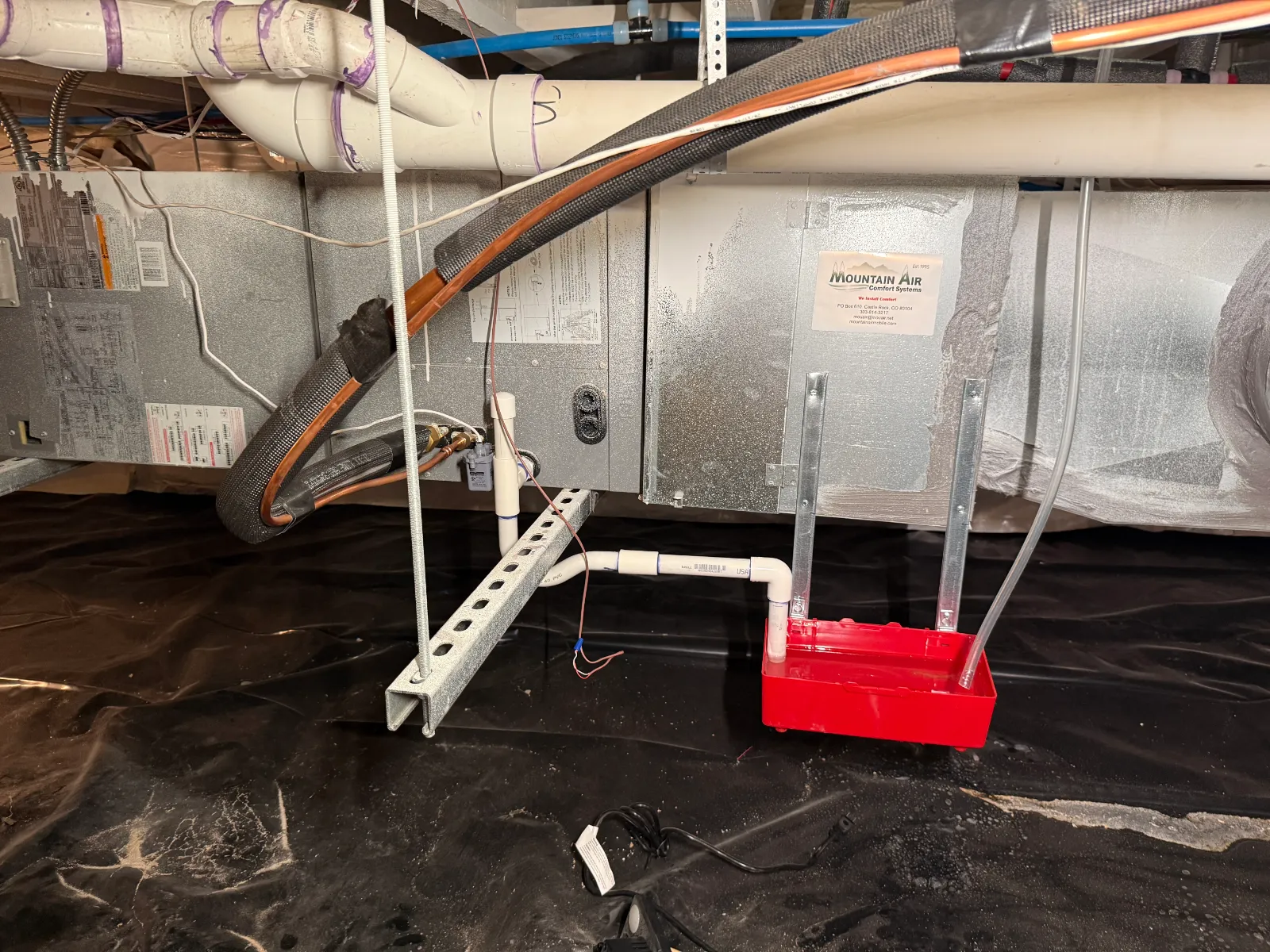
| Small plastic box with a tube is overflowing or humming nonstop | Condensate pump failed, unplugged, or its outlet tube is kinked or frozen | DIY to check; replacement is quick for a pro |
| Winter leak from a furnace with white PVC vent pipes | Clogged condensate trap, loose hose or a drain line frozen in a cold space | DIY: look and thaw. Pro: trap and internal hoses |
| Water dripping from a box mounted on the ductwork | Whole-house humidifier: stuck valve, clogged drain or worn pad frame | DIY: close its water valve. Pro: repair |
| Wet filter, frost on copper lines, summer | Frozen indoor coil melting | DIY thaw; see our frozen coil guide |
| Rust streaks, water in the burner area or dripping from the vent pipe | Venting fault or leak in the furnace's secondary heat exchanger | Pro, and run CO checks |
| Wall-mounted mini-split dripping indoors | Dirty filter, blocked drain hose or a unit that isn't level | DIY: clean filter. Pro: drain or mounting |
Where the water comes from
The AC coil. As warm, humid house air crosses the cold coil above your furnace, moisture condenses on it, drips into a pan and leaves through a drain line. That line runs to a floor drain, a laundry sink, a condensate pump or outdoors. A blocked line, a cracked pan or a loose fitting puts that water on the floor. The U.S. Department of Energy points out that a clogged drain also leaves the AC unable to pull humidity out of the house.
The furnace itself. High-efficiency furnaces (90% AFUE and up, usually vented with two white PVC pipes) squeeze extra heat from the exhaust by cooling it until water condenses. Carrier explains that this condensate forms in the secondary heat exchanger and has to be drained through a trap and hose. Older furnaces with metal flue pipes shouldn't make water at all, so a wet older furnace deserves a closer look by a technician.
The humidifier. Many Colorado homes have a whole-house humidifier on the furnace ductwork because winter air here is so dry. It is connected to a water line and a drain. A sticking solenoid valve, a clogged drain or a worn water panel can send water down the side of the furnace all winter.
- 1Make it safe
System off if water is near wiring; contain the water.
- 2Name the season
AC coil in summer, furnace drain or humidifier in winter.
- 3Drain pan
Standing water means a blocked drain and a tripped float switch.
- 4Follow the drain
Kinks, loose fittings, buried or frozen outlet.
- 5Condensate pump
Power on? Tank full? Outlet tube clear?
- 6Humidifier
Close its water valve if it's the source.
- 7Dry in 24-48 hours
Fans and a dehumidifier to prevent mold.
- 8Call a technician
Water inside the cabinet, rust, vent pipe drips or repeat leaks.
Step-by-step: find it and stop it
1. Make it safe and contain the water
If water is anywhere near wiring, shut the system off first. Then put down towels, set a shallow pan under any active drip and use a wet/dry vacuum on standing water. Move boxes and anything made of paper or cardboard away from the area.
2. Note the season and what is running
Summer and the AC running points to the coil drain or a pump. Heating season with a high-efficiency furnace points to the furnace trap or a frozen line. Water only when the humidifier is on points to the humidifier. Dry, then wet again overnight with nothing running suggests a plumbing leak nearby, such as a water heater.
3. Look at the drain pan and float switch
As the water level climbs, a float switch (mounted in the pan or spliced into the drain) cuts cooling. Bryant lists a clogged drain or activated float switch as a common reason an AC stops. Trane also recommends an overflow switch on air handlers that don't have one. Standing water in the pan means the drain downstream is blocked.
4. Follow the drain line to its end
Trace the white PVC or clear vinyl tube from the unit to where it empties. Look for a kink, a section that sags and holds water, a fitting that pulled apart, or an outlet buried under storage or ice. If the end is accessible, a wet/dry vacuum held over the outlet for a minute or two often pulls out the slime plug. If the clog is inside the trap or the unit, leave it for a technician.
5. Check the condensate pump
Basement furnaces often feed a small pump that lifts water to a drain or outside. Make sure it's plugged in and the outlet is not overloaded with other devices. If the tank is full and the motor is silent, or it hums but water doesn't move, the pump, its float or its check valve has failed. Some pumps have a safety switch wired to the furnace or AC, which is why a dead pump can also stop the system.
6. Shut off the humidifier's water
If the drip is coming from the humidifier, close the small valve on its water supply line and set the humidistat to off. That stops the leak until it can be repaired.
7. Dry everything within 24 to 48 hours
The EPA advises drying water-damaged materials and furnishings within 24 to 48 hours to prevent mold. Run fans and a dehumidifier, pull up wet carpet pads if needed, and watch drywall near the floor for staining.
8. Call if the source is inside the equipment
Water inside the burner area, in the blower compartment or from the vent pipe, a cracked pan, or a leak that returns after you've cleared the drain all need a technician.
Colorado specifics
Drain lines that freeze
Condensing furnaces keep making water all winter. If that line runs through an unheated garage, crawlspace or attic, or ends outside, it can freeze solid on a cold night. The water backs up, a safety switch shuts the furnace down, and you get a leak and no heat at the same time. The National Weather Service puts Denver's average first freeze around October 7, so check these lines before then. A line that froze once needs to be insulated, heat-traced or rerouted by a technician.
Exhaust pipes and snow
A little dripping from the outdoor PVC exhaust on a condensing furnace is normal. A large icicle or snowdrift around it is not, because it can block the vent and shut the furnace down. Our furnace blowing cold air guide covers clearing snow from PVC vents.
Dry air and humidifiers
Front Range winter air is often very dry, which is why so many homes add humidifiers. The EPA recommends keeping indoor humidity between 30% and 60% to limit mold. Pushing a humidifier well above the low end of that range in a cold snap can also cause condensation on windows and in attics. Our humidifier service can repair leaks and set the controls to match outdoor temperature.
Finished basements
Many Denver-area furnaces sit in finished basements next to carpet and drywall. A pan sensor or float switch wired to shut the system down is simple insurance. Ask about one at your next tune-up, along with a flush of the drain line.
When to call
- Water is inside the furnace cabinet, around the burners or dripping from the vent connector.
- You see rust or corrosion on the furnace's internal parts.
- The drain pan is cracked or the float switch trips again after you cleared the line.
- The condensate pump has failed.
- A drain line keeps freezing.
We handle furnace repair, AC repair and mini-split repair across our service areas. If a leak points to a furnace near the end of its life, our repair-or-replace guide can help you weigh it. For CO concerns, read our carbon monoxide safety guide, and if heat is out in a cold snap, use our emergency HVAC repairs line.
Water by the furnace and not sure where it's coming from? MrFixer Heating & Cooling can trace it: (720) 466-7983. We will find the source.
Frequently asked questions
Why is there water around my furnace?
Most often it is condensate from the AC coil above the furnace, from a high-efficiency furnace's drain, or from a humidifier. A clogged drain line or a failed condensate pump is the usual reason it ends up on the floor.
Is a furnace leaking water dangerous?
Usually it is a water-damage problem, not a safety one. But water near wiring is a shock risk, and water from the vent or heat exchanger area can signal a problem that affects carbon monoxide venting, so have that checked promptly.
Why does my AC leak only when it's running?
That is when the coil makes condensate. If the drain line is clogged or disconnected, or the pan is cracked, the water overflows while the AC runs and stops when it shuts off.
Can I unclog an AC drain line myself?
Often, yes, if the clog is near the outlet: a wet/dry vacuum held over the end of the line usually pulls it free. Leave clogs inside the trap or coil cabinet to a technician.
Why is my furnace leaking water in winter?
A high-efficiency furnace makes condensate while it heats. A blocked trap, loose hose or a drain line frozen in a garage or crawlspace can back it up. A leaking humidifier is the other common winter source.
How fast do I need to dry up a leak?
The EPA advises drying wet materials within 24 to 48 hours to prevent mold growth.
Sources (7)
- carrier.com carrier.com/us/en/residential/hvac-resources/furnaces/furnace-leaking-water/
- trane.com trane.com/residential/en/resources/troubleshooting/air-handlers/air-handler-dripping-water
- bryant.com bryant.com/en/us/products/air-conditioners/ac-not-turning-on
- energy.gov energy.gov/energysaver/maintaining-your-air-conditioner
- epa.gov epa.gov/mold/what-are-ten-things-i-need-know-about-mold
- daikin.com daikin.com/products/ac/services/troubleshooting
- weather.gov weather.gov/bou/DenverFallWinterStatistics
We'll measure the house, run a load calculation and give you written prices for each option before any work starts.
Get a Free Estimate or call (720) 466-7983