
Denver · Installation
Ductless Mini-Split Installation in Denver
Thousands of Denver homes were built around a basement boiler, and plenty of others have ducts that never reached the second floor or the finished attic. A ductless mini-split puts heating and cooling exactly where the old system falls short, using a few small wall penetrations instead of new duct chases cut through lath and plaster.
Same-dayResponse Time
All ZIPs80202–80239, 80246, 80247, 80249, 80264, 80290, 80293, 80294
Where mini-splits make sense in Denver houses
Radiator homes are the clearest case. Brick Denver Squares and many 1920s bungalows still heat with hot water or steam, which feels great in January and does nothing in July. Two to four wall heads give those homes real cooling and a second heat source, and the boiler can stay for the coldest nights. Our older-home ductless guide lays out typical head placements for these houses.
Postwar ranches in Harvey Park and Athmar Park usually have ducts, but basements finished decades later often got one undersized register or none. A single-zone head on a basement wall fixes that without rebalancing the whole house. Newer Central Park homes rarely need ductless except for a converted garage, a carriage-house unit or an office over the garage.
Denver at a Glance
- Elevation
- 5,280 ft
- County
- City and County of Denver (consolidated)
- Permits
- City and County of Denver, Community Planning and Development (CPD) (denvergov.org pages blocked automated fetching; confirm residential…
- Gas utility
- Xcel Energy
- Electric utility
- Xcel Energy
- Winter design temp
- 3°F (Denver, ENERGY STAR/ASHRAE 99%)
- Gas furnace output loss
- ≈21% vs. sea level (about 4% per 1,000 ft)
- Power Ahead rebate
- Available for existing homes ($1,500, cold-climate heat pumps)
- Housing
- Population 715,522 (2020 census). About 17% of housing units built 1939 or earlier, 27% 1940-1969, 25% 1970-1999, 31% 2000 or later; ~40% single-family detached, ~45%…
Facts checked November 2026. Sources listed below.
Denver Climate Note
Mile High elevation (5,280 ft) means HVAC equipment derates and combustion needs altitude tuning. Dry winter air drops indoor RH below 15% — humidifiers strongly recommended.
Neighborhoods We Serve
Capitol Hill, LoDo, Cherry Creek, Park Hill, Wash Park, Highlands, Stapleton, Berkeley, Sloan's Lake, RiNo, Five Points, Baker, Platt Park
One zone, several zones, or several systems
A single-zone system pairs one outdoor unit with one indoor head. It is the most efficient answer for one problem space, like a sleeping porch that was enclosed in the 1950s. Multi-zone systems run several heads from one outdoor unit, which saves room outside but ties every head to one compressor. On a narrow city lot the side yard often fits only one condenser, so a multi-zone unit placed near the alley is a common compromise.
Each head is sized to its room from a Manual J calculation. An oversized head in a small bedroom cycles on and off constantly, wastes power and leaves the room clammy in August.
Cold-weather design at 5,280 feet
Manual J uses 3°F as the city's heating design temperature, and NOAA records show roughly 91 hours a year below 5°F. Cold-climate mini-splits are built for that range; ENERGY STAR's cold-climate label requires a coefficient of performance of at least 1.75 at 5°F. Altitude still trims output, and NREL testing in Golden found capacity about 5–7% under sea-level ratings, so we check each model's published 5°F capacity against the room it serves.
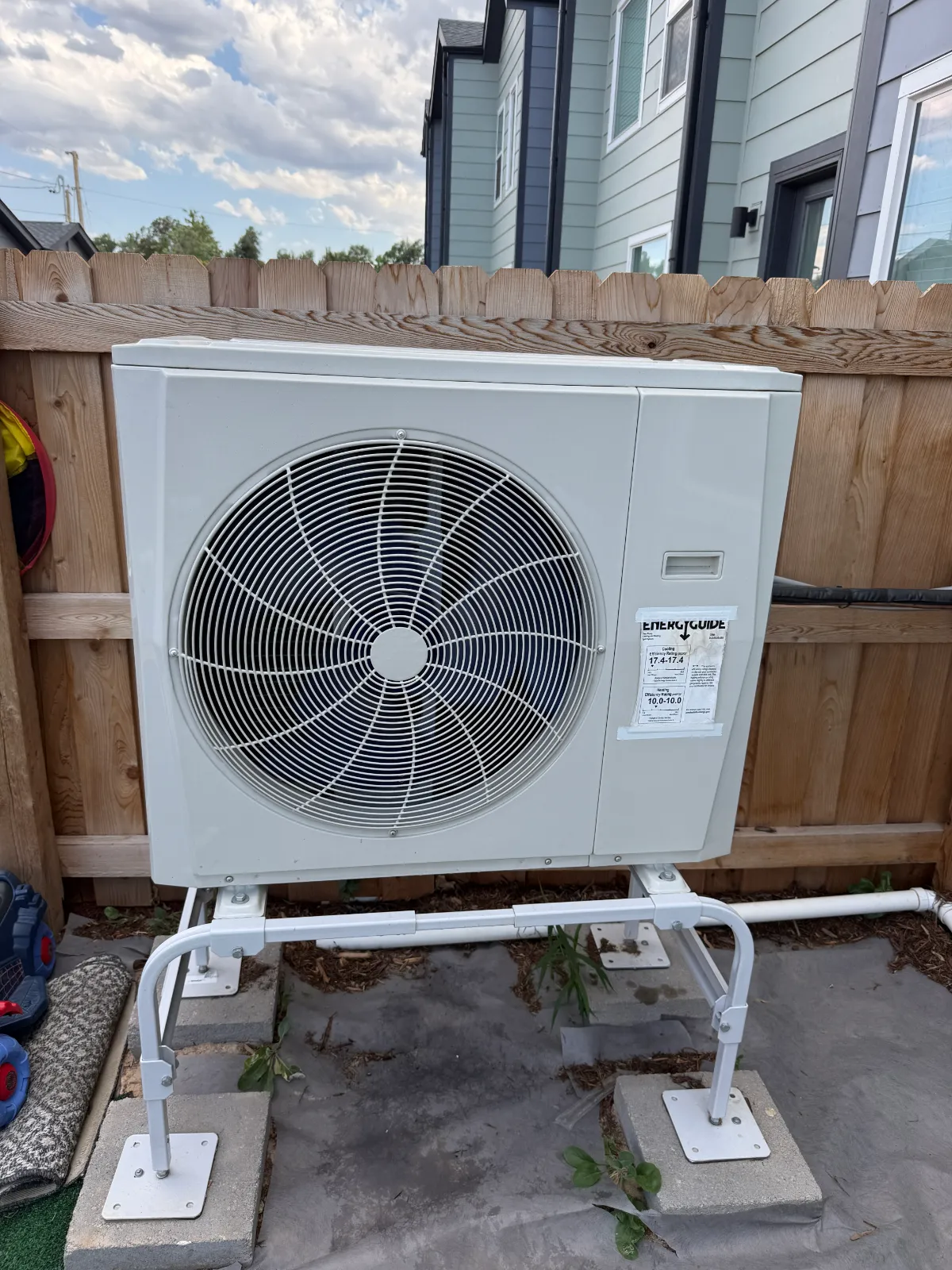
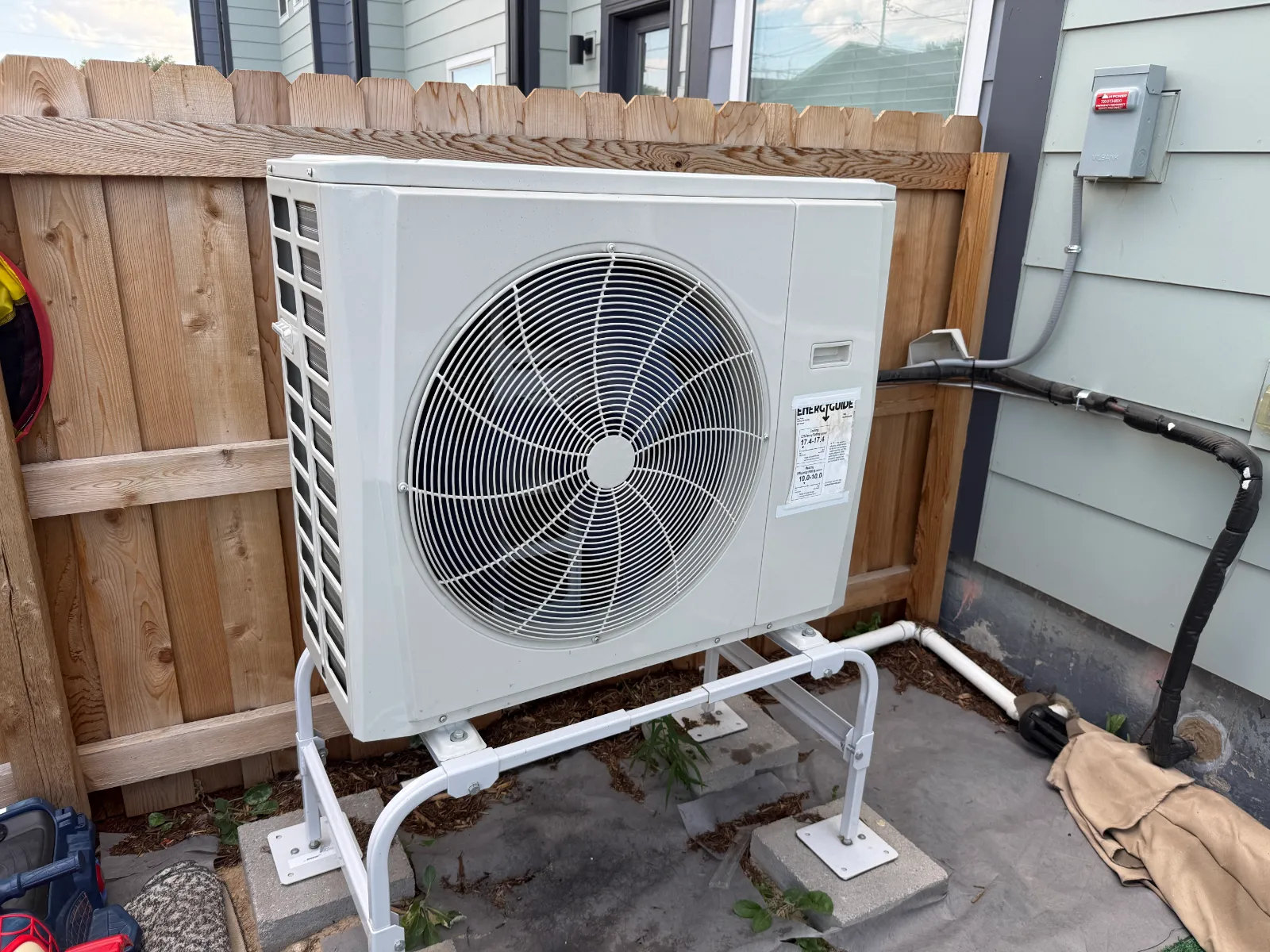
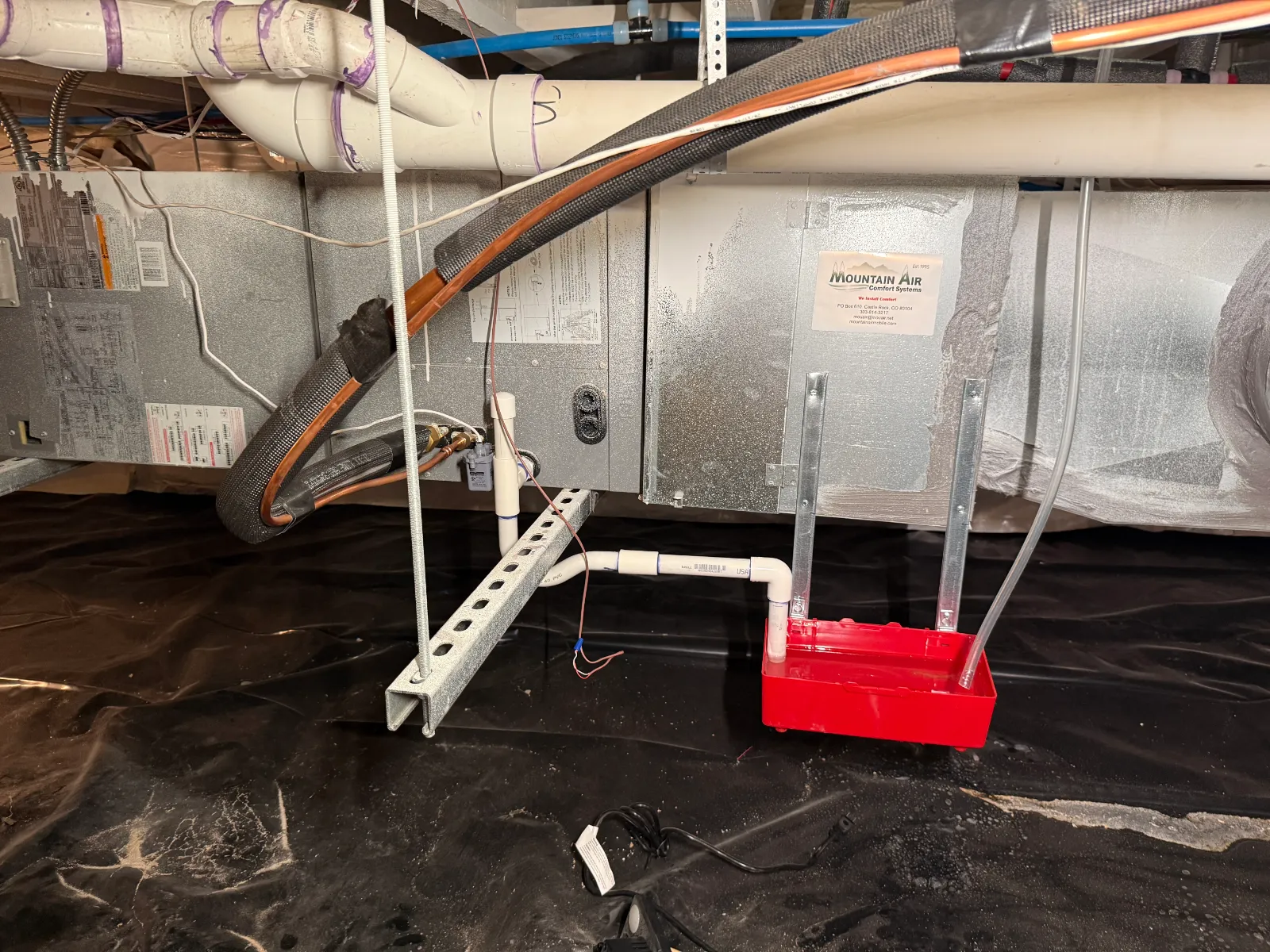
Outdoor units drip meltwater during defrost. If that water lands on a shaded north-side walk, it turns into a sheet of ice by morning. We put condensers on stands or wall brackets above normal snow depth and aim the drain away from steps and alley aprons. Indoor condensate lines that cross unheated space get pitch and insulation so they keep draining in a cold snap.
Panels, line sets and street-facing walls
Plenty of older houses here still run on 100-amp service. Each mini-split needs a dedicated 240-volt circuit, and a multi-zone unit draws more than a single head, so we run a load calculation before quoting. Line sets can often climb inside a closet or run down the rear wall in a paintable cover that matches the trim.
In a designated historic district, equipment you can see from the street can trigger design review on top of the permit. Putting the condenser out back and running lines along the alley side usually leaves the front facade exactly as it was.
Incentives and permits
Start with what is gone: the federal 25C credit stopped covering equipment installed after December 31, 2025. Still available for a Denver mini-split are the state's $1,000 air-source credit (your registered contractor files it and passes along at least $333 as an invoice discount) plus $1,500 through Power Ahead Colorado when the outdoor unit is a cold-climate model, which the city qualifies for as a DRCOG member. Power Ahead needs the application in before we start. Xcel reworked heat pump rebate amounts as of October 1, 2026; ask Xcel what a ductless system earns today.
Community Planning and Development, the city's permitting department, issues the mechanical and electrical permits; we handle both applications and book the inspections.
Ductless Mini-Split Installation Work Around the Denver Metro
Real photos from MrFixer jobs in nearby communities — the same crew that serves Denver.
Ductless Mini-Split Installation FAQs — Denver
Can I keep my boiler if I add mini-splits?
Yes. Many Denver owners let the mini-split handle cooling and most heating hours, and the boiler takes over on the coldest nights.
How many indoor heads does a Denver Square need?
Often three or four: one per upstairs bedroom or pair of rooms and one for the main floor. The room-by-room load calculation sets the final count.
Will I need a new electrical panel?
It depends on the panel. A single-zone system on a 100-amp panel with open slots is often fine; a large multi-zone or all-electric plan may need an upgrade, which we check at the estimate.
Which incentives apply in Denver now?
The $1,000 state credit, Power Ahead's $1,500 for cold-climate models, and Xcel rebates at whatever the current amount is. The federal credit has ended.
Sources for this Denver page (17) · checked November 2026
Signs You Need Ductless Mini-Split Installation
01
Adding HVAC to a room without ducts
03
Want quieter operation than central AC

02
Some rooms hot, others cold
04
Finishing basement, attic, or garage
More HVAC Services in Denver
All HVAC services in Denver · Ductless Mini-Split Installation across the Denver metro
Furnace Repair
Reliable furnace repair when you need it most.
Learn moreAir Conditioner Repair
Fast, same-day AC repair across Colorado.
Learn moreFurnace Installation
Expert furnace installation for Colorado winters.
Learn moreAir Conditioning Installation
Professional AC system installation for homes and businesses.
Learn moreHeat Pump Installation
Energy-efficient heat pumps for year-round comfort.
Learn moreSeasonal HVAC Tune-Ups
Spring and fall tune-ups to keep systems running smoothly.
Learn moreHeat Pump Repair
Diagnostics and repair for heat pump systems.
Learn moreDuctless Mini-Split Installation Near Denver
Free tools for Denver homeowners
- Replacement cost calculator — a Denver-metro price range with 2026 incentives
- Furnace altitude calculator — real heat output at Denver’s elevation
- Troubleshooting guide — what to check before you call
Our Professionalism Is Reflected in Our Customer's Feedback.
Don't just take our word for it — hear from Colorado homeowners who trust us with their comfort.
Share Your Experience
Your feedback helps us serve Colorado homeowners better.
Local 24/7 Response · Colorado
Our Craftsmanship Is Undeniable.
HVAC emergency? Our team is available 24/7 for urgent heating and cooling repairs across Colorado. Don't wait — call now.
Call For Emergency Service
(720) 466-7983
Available 24 / 7 · 365 days
Free quotes · No obligation
Get Your Free Estimate Today.
Fill out the form below and one of our HVAC experts will get back to you within 30 minutes.
- Free quote in 30 min · no obligation
- Licensed & insured Colorado contractor
- 5★ rated by 1,500+ homeowners
- Same-day service across the Front Range
Phone
(720) 466-7983
Email
info@mrfixer.io
Location
Colorado, CO
Hours
Mon-Sat: 7AM-8PM | Emergency: 24/7