
Denver · Installation
AC Installation & Replacement in Denver
Denver averages about 38 days a year at 90 degrees or above, and a growing number of households have decided window units are no longer enough. The city's housing is also unusually varied: about 17 percent of homes were built before 1940 and another 27 percent between 1940 and 1969. That means many Denver installations start with a basic question: can this house carry ducted cooling at all?
Same-dayResponse Time
All ZIPs80202–80239, 80246, 80247, 80249, 80264, 80290, 80293, 80294
Denver Squares and other homes with boiler heat
Brick foursquares and many early homes were heated by a boiler or gravity furnace in the basement. If yours still has radiators, there is no duct system to add a coil to. Building one through plaster walls is expensive and disruptive. A ductless heat pump, with heads in the main living area and bedrooms, or a small-duct high-velocity system run through closets, is usually the better fit. Our mini-split guide covers the trade-offs.
If a previous owner converted to forced air, the ducts were often sized for heat only, with the second floor served by a few long runs. We measure before promising whole-house central air.
Denver at a Glance
- Elevation
- 5,280 ft
- County
- City and County of Denver (consolidated)
- Permits
- City and County of Denver, Community Planning and Development (CPD) (denvergov.org pages blocked automated fetching; confirm residential…
- Gas utility
- Xcel Energy
- Electric utility
- Xcel Energy
- Gas furnace output loss
- ≈21% vs. sea level (about 4% per 1,000 ft)
- Housing
- Population 715,522 (2020 census). About 17% of housing units built 1939 or earlier, 27% 1940-1969, 25% 1970-1999, 31% 2000 or later; ~40% single-family detached, ~45%…
Facts checked November 2026. Sources listed below.
Denver Climate Note
Mile High elevation (5,280 ft) means HVAC equipment derates and combustion needs altitude tuning. Dry winter air drops indoor RH below 15% — humidifiers strongly recommended.
Neighborhoods We Serve
Capitol Hill, LoDo, Cherry Creek, Park Hill, Wash Park, Highlands, Stapleton, Berkeley, Sloan's Lake, RiNo, Five Points, Baker, Platt Park
Postwar ranches in Harvey Park, Westwood, and University Park
Over 16,000 single-family homes were built in the 1940s, many of them small Minimal Traditional houses in neighborhoods like Harvey Park, Athmar Park, Westwood, and University Park. These are good candidates for central air: a basement furnace, short duct runs, and a simple floor plan. Most need extra return air, and many still have small electrical panels. A condenser needs its own 240-volt circuit, so we check the panel during the estimate.
Swamp coolers are common in these neighborhoods. Converting means sealing the roof or window opening and redesigning the return path, since the cooler pushed outside air through open windows.
Narrow lots, hail, and condenser placement
On a 25- or 50-foot city lot, the condenser often ends up in a side yard a few feet from a neighbor's bedroom window. Placement affects noise, airflow, and inspection. We keep code clearances, avoid tight spots where the unit recirculates hot air, and confirm placement during permitting with Community Planning and Development.
The city has had three of the ten costliest U.S. hailstorms in 1990, 2009, and 2017, and even ordinary storms flatten coil fins. Keep condensers away from roof valleys and downspouts, and consider a hail guard.
Replacing systems in Central Park and newer homes
Homes built since 2000, including the former Stapleton area, are reaching the age for first replacement. New split systems use R-454B or R-32, so the indoor coil is replaced as a matched pair. The minimum in DOE's North region is 13.4 SEER2 for a split AC and 14.3 SEER2 for a split heat pump. At 5,280 feet, capacity is reduced a bit by thin air, so we size with a Manual J rather than copying the old nameplate.
These homes were often built with tight, well-insulated envelopes and a single thermostat on the main floor. A load calculation commonly shows the original condenser was larger than needed, and a properly sized replacement with a variable-speed blower can even out the upstairs.
Heat pumps and Denver incentives
Xcel Energy supplies gas and electricity citywide and has offered rebates for qualifying heat pumps, not standard AC; confirm current amounts, which changed October 1, 2026. Denver has also run Climate Action Rebates for heat pumps, designed to stack with Xcel's, so check what is open. Colorado's 2026 air-source credit is $1,000, claimed by the contractor with at least $333 discounted to you, and Power Ahead Colorado pays $1,500 for cold-climate units filed before work begins.
Air Conditioning Installation in Denver: Service Area Map
Orange shows the Denver boundary; dashed lines are county borders (Denver County highlighted in white). Blue areas are other communities MrFixer serves — tap one to open its page.
Air Conditioning Installation Work Around the Denver Metro
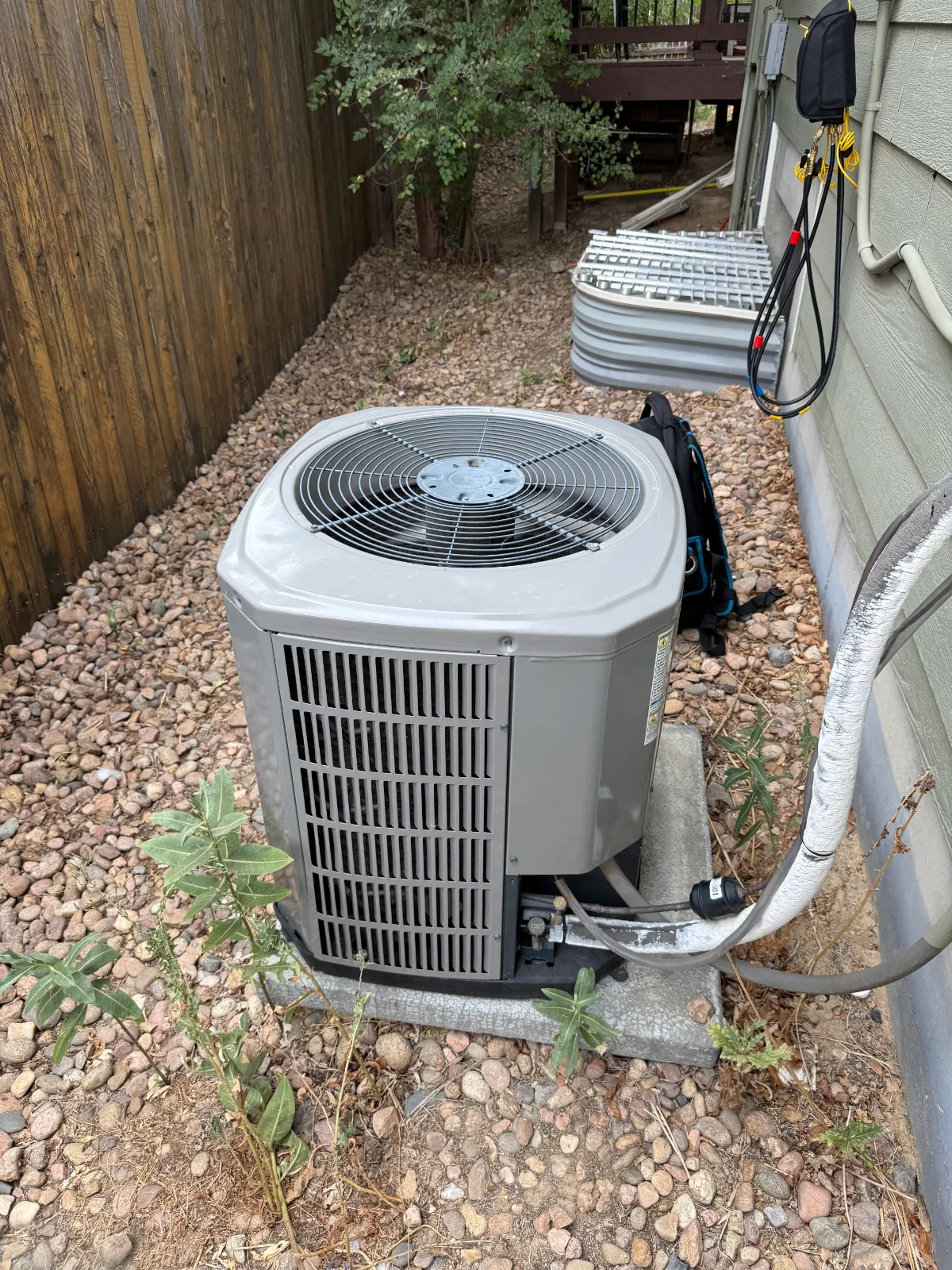
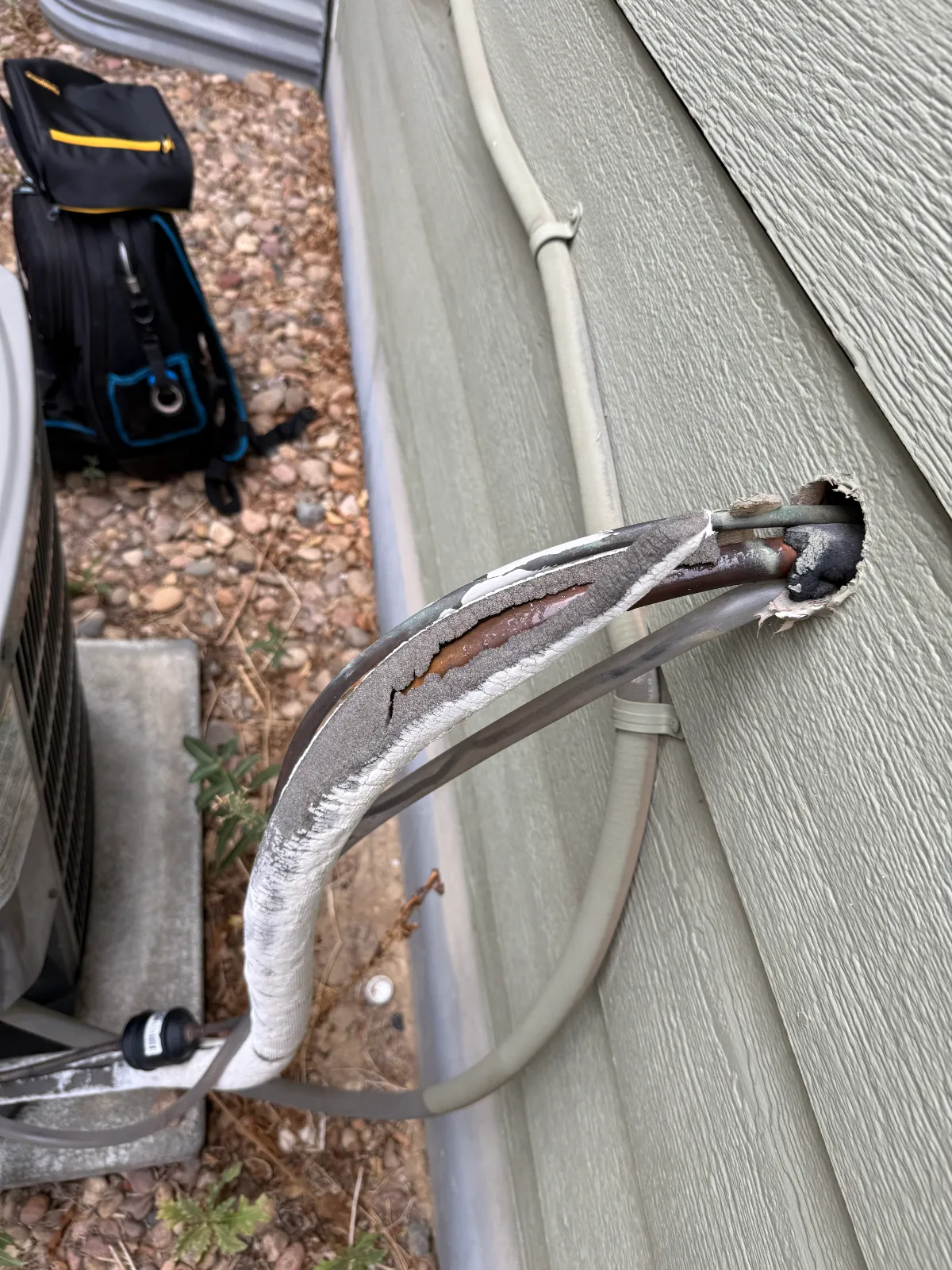
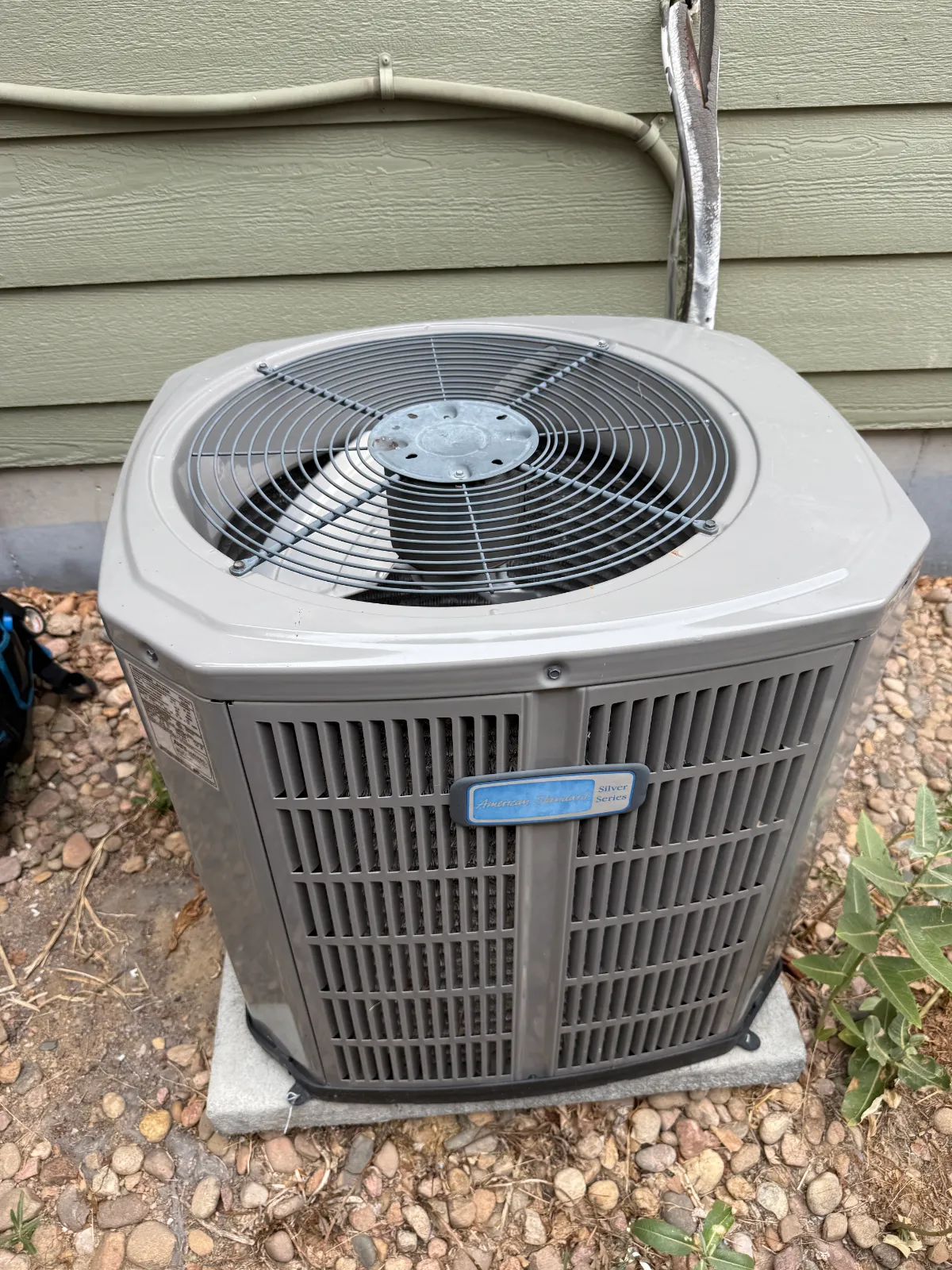
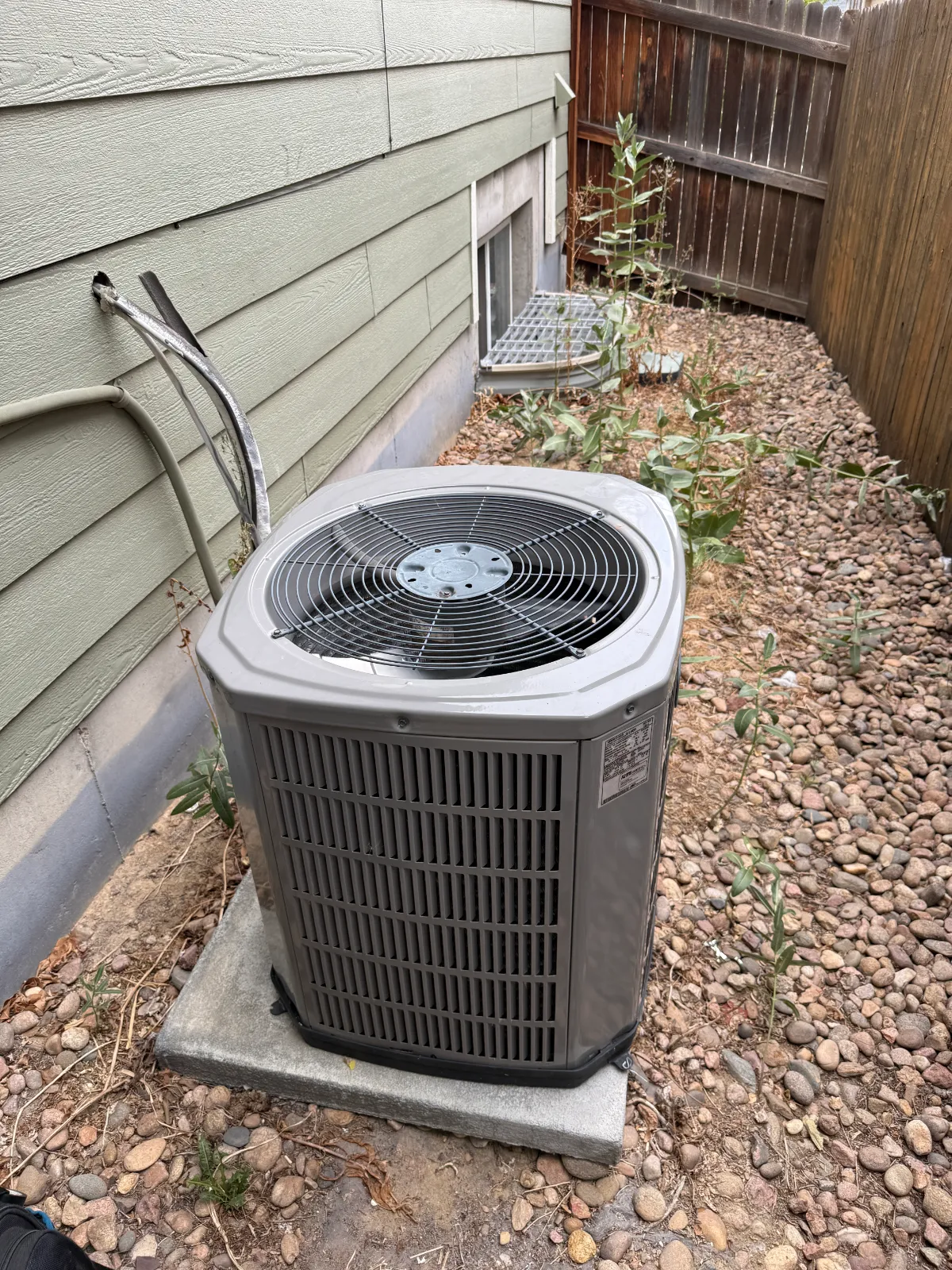
Real photos from MrFixer jobs in nearby communities — the same crew that serves Denver.
Air Conditioning Installation FAQs — Denver
Can a Denver house with radiators get air conditioning?
Yes. Ductless or small-duct high-velocity systems are designed for homes without ductwork, and a ductless heat pump also adds efficient heat.
Who issues AC permits here?
Community Planning and Development. We pull the permit and schedule the inspection.
Can I stack Denver and Xcel rebates?
Denver's Climate Action Rebates have been designed to combine with Xcel incentives, but funding and terms change. Check both programs before you buy.
Is my electrical panel big enough for central air?
Many older homes in the city have limited panel capacity. We read the new unit's electrical requirements against your panel during the estimate.
Should I choose a heat pump instead of a new AC?
It is worth pricing. A heat pump cools the same as an AC, handles much of the winter heating, and qualifies for incentives standard AC does not. Our heat pump vs. furnace guide explains when it pays off.
Sources for this Denver page (10) · checked November 2026
Signs You Need Air Conditioning Installation
01
AC unit is more than 10-15 years old
03
Rooms are uneven temperatures or humid

02
Recent repairs cost more than 50% of replacement
04
Energy bills climb every summer
More HVAC Services in Denver
All HVAC services in Denver · Air Conditioning Installation across the Denver metro
Furnace Repair
Reliable furnace repair when you need it most.
Learn moreAir Conditioner Repair
Fast, same-day AC repair across Colorado.
Learn moreFurnace Installation
Expert furnace installation for Colorado winters.
Learn moreHeat Pump Installation
Energy-efficient heat pumps for year-round comfort.
Learn moreSeasonal HVAC Tune-Ups
Spring and fall tune-ups to keep systems running smoothly.
Learn moreHeat Pump Repair
Diagnostics and repair for heat pump systems.
Learn moreDuctless Mini-Split Installation
Flexible mini-split systems for any space.
Learn moreAir Conditioning Installation Near Denver
Free tools for Denver homeowners
- Replacement cost calculator — a Denver-metro price range with 2026 incentives
- Furnace altitude calculator — real heat output at Denver’s elevation
- Troubleshooting guide — what to check before you call
More Denver HVAC Resources
Brands we service
Related services
Our Professionalism Is Reflected in Our Customer's Feedback.
Don't just take our word for it — hear from Colorado homeowners who trust us with their comfort.
Share Your Experience
Your feedback helps us serve Colorado homeowners better.
Local 24/7 Response · Colorado
Our Craftsmanship Is Undeniable.
HVAC emergency? Our team is available 24/7 for urgent heating and cooling repairs across Colorado. Don't wait — call now.
Call For Emergency Service
(720) 466-7983
Available 24 / 7 · 365 days
Free quotes · No obligation
Get Your Free Estimate Today.
Fill out the form below and one of our HVAC experts will get back to you within 30 minutes.
- Free quote in 30 min · no obligation
- Licensed & insured Colorado contractor
- 5★ rated by 1,500+ homeowners
- Same-day service across the Front Range
Phone
(720) 466-7983
Email
info@mrfixer.io
Location
Colorado, CO
Hours
Mon-Sat: 7AM-8PM | Emergency: 24/7