
Key takeaways
- Check the filter monthly, change it when it’s dirty. ENERGY STAR’s maintenance checklist says to inspect, clean or change filters once a month; a dirty one raises energy costs and can shorten equipment life.
- MERV 8–11 suits most homes day to day. Go to MERV 13 for wildfire smoke, which EPA recommends for central systems that can handle it.
- Thicker beats denser. A 4- or 5-inch media filter gives MERV 13 performance with far less airflow restriction than a 1-inch MERV 13.
- Colorado loads filters fast: dry dust, spring cottonwood, construction dirt in growing suburbs and summer smoke.
- The wrong filter causes real problems: limit trips and short cycling in winter, frozen AC coils in summer.
The furnace filter is the cheapest part of your heating and cooling system and the one most likely to cause a service call. Too dirty, too dense for the blower, the wrong size or installed backwards, and it can trip the furnace off on a cold night. Here’s how to choose and change one for a Colorado house.
Where the filter is
- In a slot beside the furnace, between the return duct and the blower. Most common in basements.
- Inside the blower compartment, behind the lower door.
- Behind a return grille in a wall or ceiling, common in townhomes, attic furnaces and systems with an air handler.
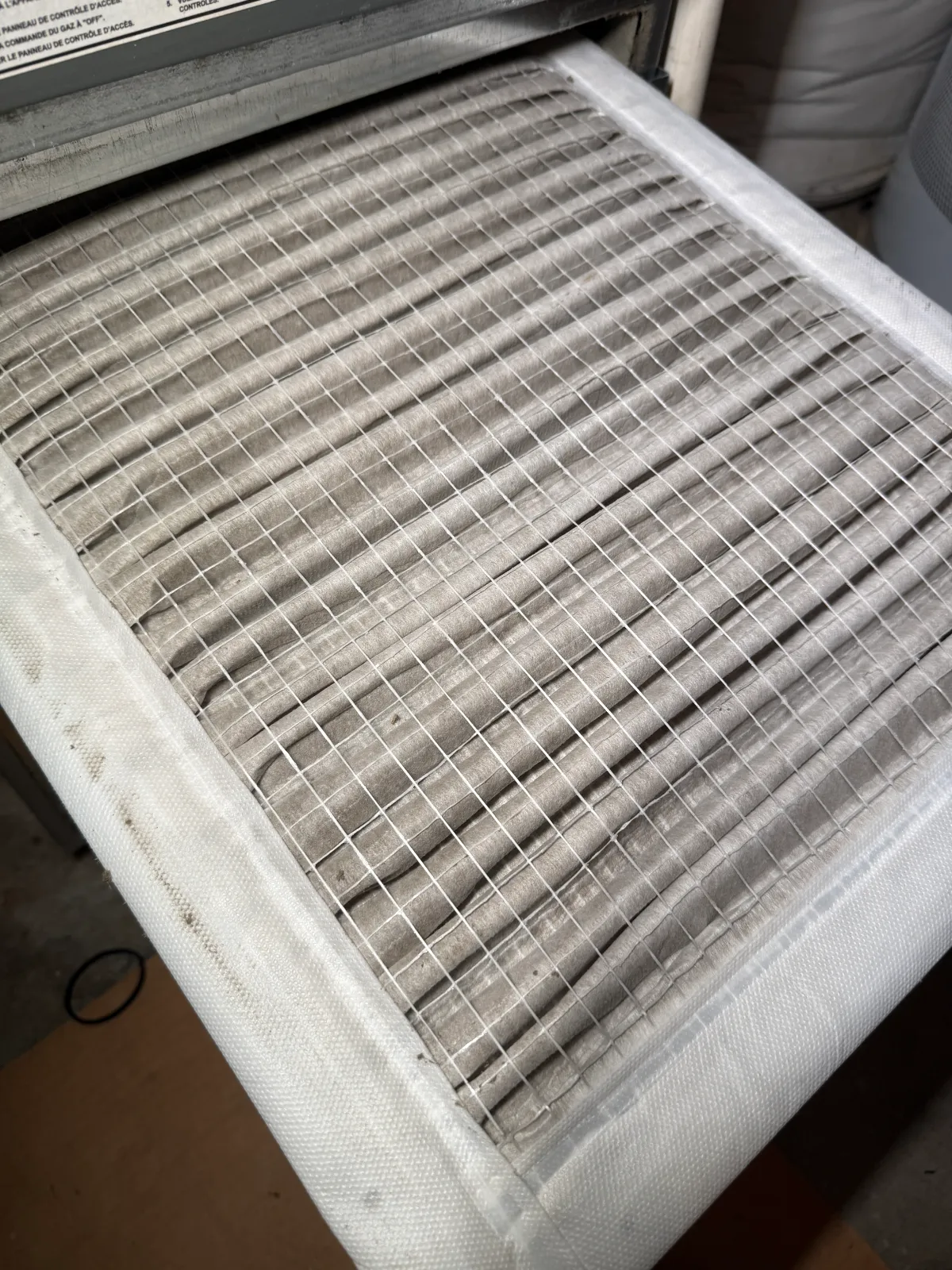
- In a media cabinet, a 4–5-inch-deep box with its own door, usually added during a replacement.
Mini-splits don’t use these filters; their indoor heads have washable screens. See mini-split troubleshooting.
MERV, explained
MERV (Minimum Efficiency Reporting Value) rates how well a filter captures particles, from 1 to 16. Higher numbers catch finer particles, such as smoke, but in the same thickness they also restrict more air.
Thickness: the overlooked choice
| Filter | Typical change interval | Good for | Watch out for |
|---|---|---|---|
| 1-inch fiberglass | Monthly | Blower protection only | Little air-quality benefit |
| 1-inch pleated (MERV 8–11) | 1–3 months | Most standard slots | Loads fast in dusty or smoky months |
| 1-inch MERV 13 | 1–2 months | Short smoke events | Can restrict airflow on small or older systems |
| 2-inch pleated | 2–4 months | Systems with a 2-inch rack | Must match the rack exactly |
| 4–5-inch media (MERV 11–13) | 6–12 months | Best balance of filtration and airflow | Needs a media cabinet; buy the cabinet’s exact size |
Change intervals are typical ranges, not rules: pets, renovation, smoke and long run times all shorten them. The filter you pull out is the real guide.
How to change it
- 1Turn it off
Thermostat off; service switch off if the filter is inside the cabinet.
- 2Read the old filter
Write down the size printed on the frame (e.g. 16×25×1) and the MERV.
- 3Check the arrow
Airflow arrow points toward the furnace, away from the return.
- 4Slide it in snug
No gaps around the edges; close the slot cover or door.
- 5Turn it back on
Restore power and heat; write the date on the frame.
- 6Set a reminder
Check again in a month, sooner in smoke or cottonwood season.
Colorado specifics
Wildfire smoke
During smoke events, EPA recommends a MERV 13 filter in central forced-air systems, running the fan as much as possible to get the most out of the filter, closing any fresh-air intake or switching to recirculate, and changing filters more often while smoke is heavy. Homes without ducted systems can use a portable air cleaner sized for the room that doesn’t produce ozone. Swamp coolers bring outdoor air in, so avoid running them in heavy smoke unless it’s a heat emergency.
Dust, cottonwood and construction
Dry Front Range air carries a lot of fine dust, and late-spring cottonwood fluff clogs both filters and outdoor AC coils. New neighborhoods under construction add drywall and soil dust for years. Check filters monthly in those seasons.
Winter: a dirty filter can shut the heat off
Restricted airflow overheats the heat exchanger, and the high-limit switch turns the burners off to protect it. The furnace cools, relights and trips again: short cycling, with warm-then-cool air. A fresh filter fixes a surprising number of “no heat” calls. More in furnace short cycling and furnace blowing cold air.
Summer: frozen coils
Low airflow lets the AC coil drop below freezing and ice up. See AC frozen coil.
Is a higher MERV filter bad for my furnace?
Not by itself. The question is how much resistance the filter adds compared with what your blower and ducts can handle. A technician can measure static pressure across the filter and the system. If it’s too high with the filter you want, the fix is usually a deeper media cabinet or a larger return, not a weaker filter. We check this on every tune-up and can install a media cabinet or a whole-house air cleaner.
When to call
- The filter is wet, moldy or crushed, or there’s no filter slot at all.
- The filter is pulled into the blower or bent in the middle (a sign of high suction).
- The furnace still short-cycles or the AC still freezes with a fresh filter.
- You want MERV 13 or better without hurting airflow.
MrFixer handles filter upgrades, airflow testing and filter replacement plans; book a visit at (720) 466-7983.
Sources (2)
- energystar.gov energystar.gov/saveathome/heating-cooling/maintenance-checklist
- content.govdelivery.com content.govdelivery.com/accounts/USEPAIAQ/bulletins/2e8f6bc
We'll measure the house, run a load calculation and give you written prices for each option before any work starts.
Get a Free Estimate or call (720) 466-7983