
Columbine · Maintenance
Seasonal HVAC Tune-Ups in Columbine
Columbine boomed between 1958 and 1968 when the Martin Company built its missile plant in Waterton Canyon, and most of its housing went up from the 1960s through the 1990s. Neighborhoods like Columbine Knolls, Columbine Hills and Columbine West are full of ranches, split-levels and bi-levels whose layouts make heating and cooling uneven. A tune-up here is a good time to fix comfort problems as well as check safety.
Same-dayResponse Time
All ZIPs80123, 80128
Split-levels and bi-levels: one system, several floors
A split-level puts bedrooms half a floor above the furnace and a family room half a floor below. One blower serves all of it, and the upper level almost always runs warmer in summer while the lower level stays cool. During a tune-up we measure airflow at the registers, check that balancing dampers in the trunk lines still move, and show you where to set them for heating and cooling seasons. Small changes in damper positions, combined with fan settings, often even out a house without new equipment.
Bi-levels raise the same question in reverse, with the furnace in a lower level that may be partly below grade. Those mechanical rooms can be damp, and we look for rust on the furnace base and the coil cabinet.
Columbine at a Glance
- Elevation
- 5,542 ft
- County
- Jefferson County (unincorporated CDP; a small portion…
- Permits
- Jefferson County Building Safety for the Jefferson County portion (mechanical permit form lists furnace repair/replacement and air…
- Gas utility
- Varies by address — check your bill
- Electric utility
- Varies by address — check your bill
- Gas furnace output loss
- ≈22% vs. sea level (about 4% per 1,000 ft)
- Housing
- Grew rapidly 1958-1968 with the Martin Company missile facility in Waterton Canyon; population first passed 20,000 in 1980. Housing mostly 1960s-1990s: ranches,…
Facts checked November 2026. Sources listed below.
Columbine Climate Note
At about 5,542 feet, furnaces need altitude setup and AC capacity drops slightly in thinner air. Front Range summer hail regularly damages condenser coils.
Neighborhoods We Serve
Columbine Knolls, Columbine West, Columbine Hills, Leawood, Vintage Reserve
Fall: furnaces in 1960s and 1970s houses
Columbine Knolls homes have a median build year of 1970, so many still use the original ductwork and chimney with a replacement furnace. The fall visit covers burner inspection, flame sensor cleaning, igniter and inducer tests, a heat exchanger check, CO testing in the flue and room, and draft at the water heater. At about 5,540 feet the furnace should fire roughly 22 percent below its sea-level input. We check gas pressure and confirm the orifices match the altitude.
Craftsman and newer homes in Leawood and Vintage Reserve
Multi-story homes in Leawood and Vintage Reserve are more likely to have two-stage furnaces, variable-speed blowers or a second system for the upper floor. Their tune-ups add checks on staging, blower settings, and zoning if installed. If you have a newer system, confirm it was registered within the manufacturer's window; Trane and Lennox both use 60 days. We record model and serial numbers so you can check.
Spring: AC added to older houses
Many Columbine homes did not have central air originally, and the AC was added later with an evaporator coil set on top of the furnace. Those coils can be tight against the plenum, making them hard to clean and easy to clog. The spring visit cleans the outdoor coil, checks refrigerant readings, tests the capacitor and contactor, inspects the evaporator coil and condensate drain, and looks for hail damage. Units that still use R-22 refrigerant can keep running as long as they hold their charge, but a leak repair becomes expensive since new R-22 is no longer made.
Filters, smoke and dry winter air
Columbine's mature trees drop seeds and leaves onto outdoor units, and summer smoke from foothill fires reaches the area. EPA recommends a MERV 13 filter during smoke events if the system tolerates it. Older returns are often undersized, so we measure static pressure first. Humidifiers on the furnace need a new pad and a clear drain every fall.
Permits, CO alarms and timing
Tune-ups need no permit. Replacements in the Jefferson County part of Columbine go through Jefferson County Building Safety, and the small Arapahoe portion goes through Arapahoe County. Colorado requires CO alarms within 15 feet of each sleeping room entrance on sale or after permitted gas appliance work; split-levels often need alarms on more than one level. Book the furnace visit in September and AC in April or May. Our HVAC tune-up checklist for Colorado lists every step.
Seasonal HVAC Tune-Ups in Columbine: Service Area Map
Orange shows the Columbine boundary; dashed lines are county borders (Jefferson County highlighted in white). Blue areas are other communities MrFixer serves — tap one to open its page.
Seasonal HVAC Tune-Ups Work Around the Denver Metro
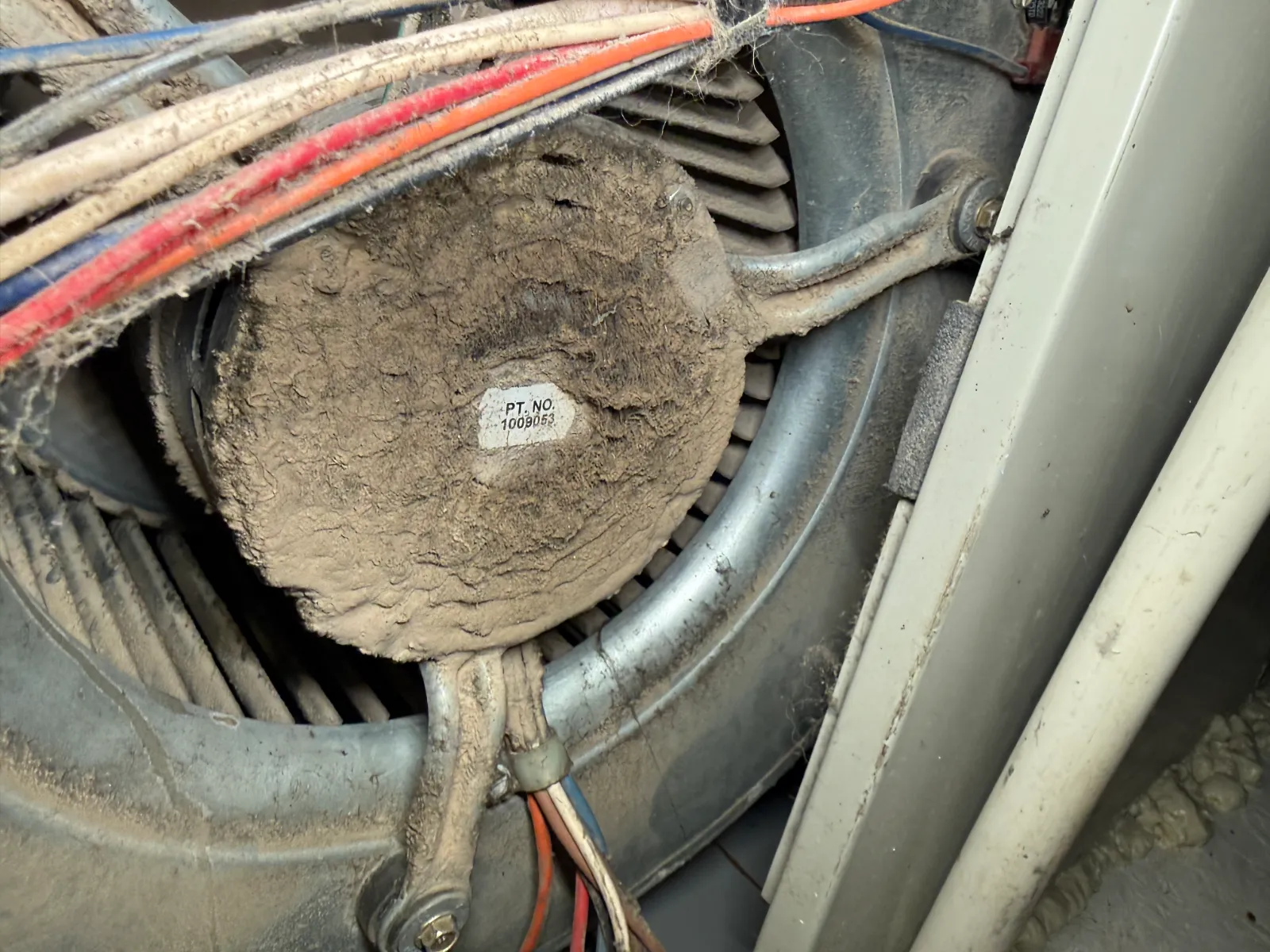
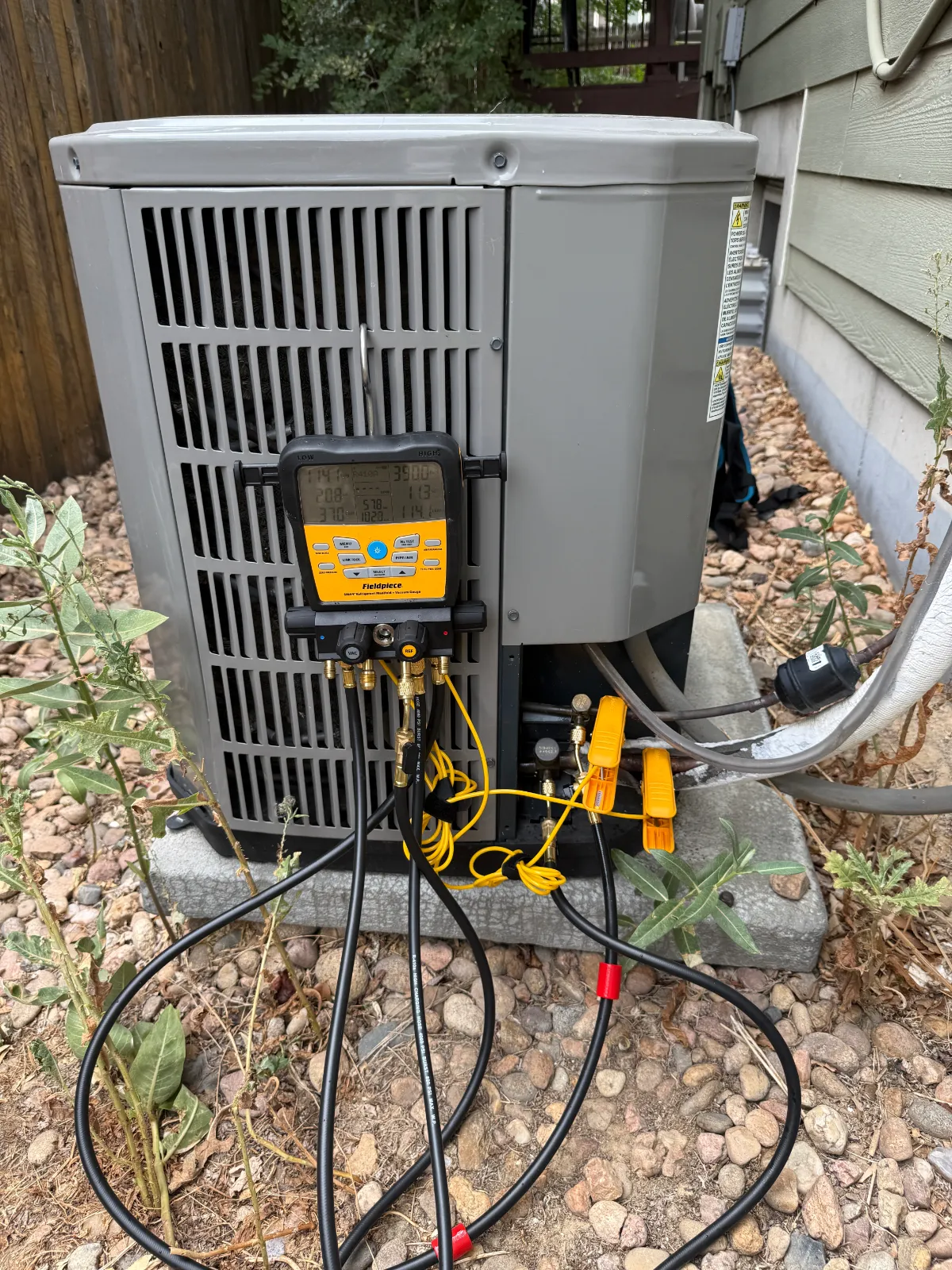
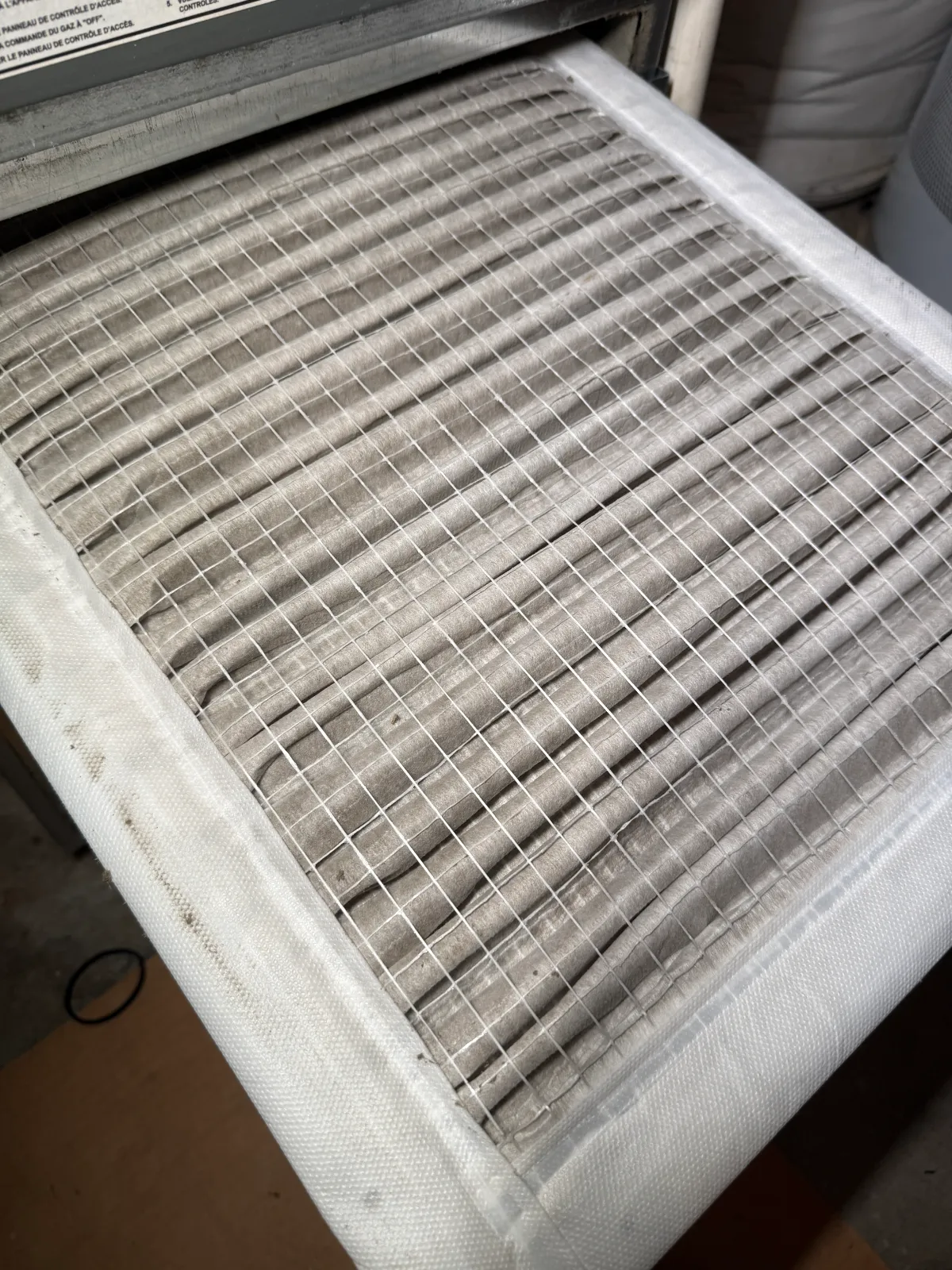
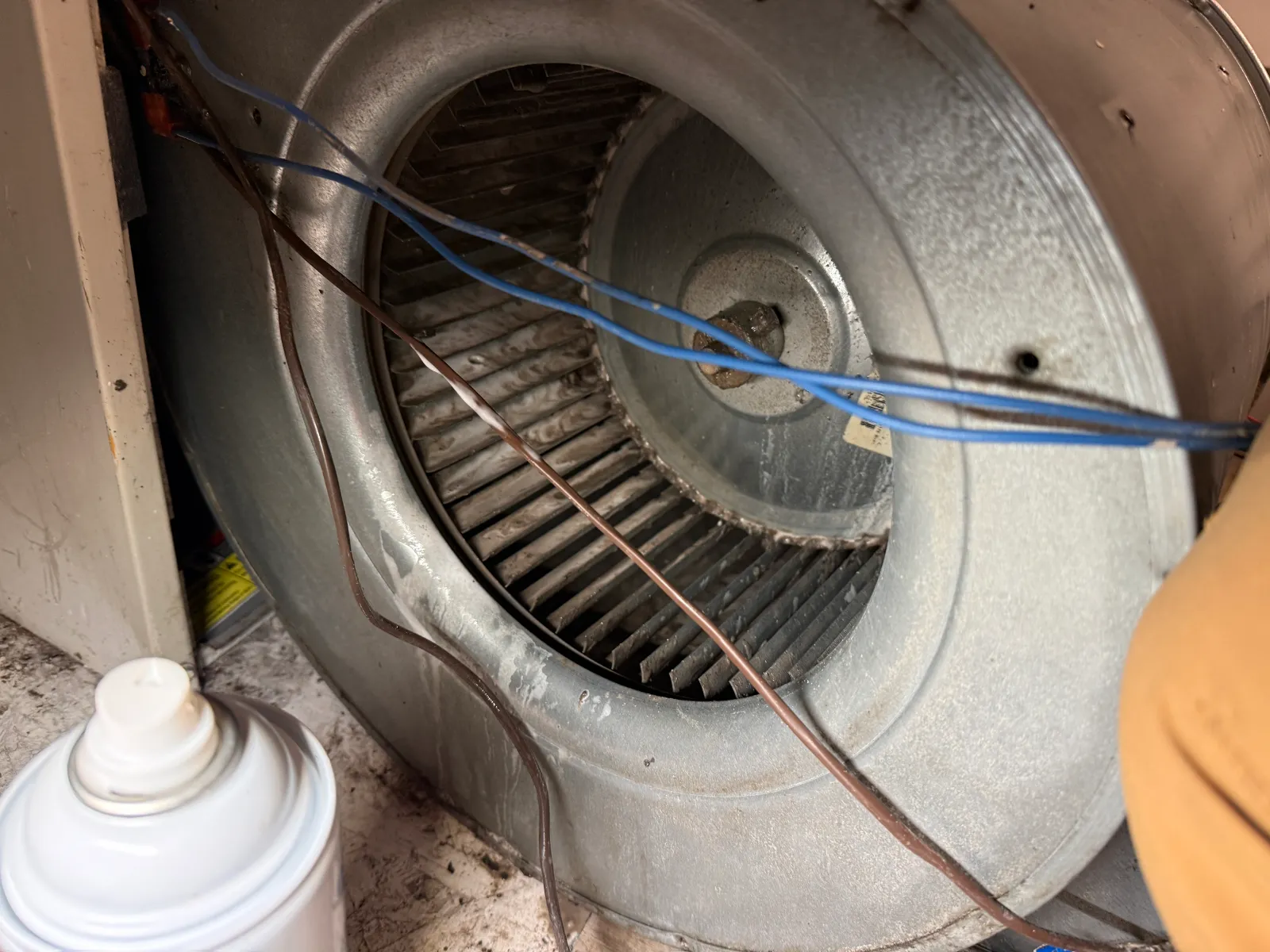
Real photos from MrFixer jobs in nearby communities — the same crew that serves Columbine.
Seasonal HVAC Tune-Ups FAQs — Columbine
Why is my split-level's upstairs always hot in summer?
Heat rises and a single blower serves all levels. Adjusting dampers and fan settings often helps; we check during the spring visit.
Our AC still uses R-22. Should we replace it?
Not if it runs well and holds charge. Keep maintaining it, but plan ahead, since R-22 repairs get costly.
Which county handles permits for my Columbine home?
Most of Columbine is in Jefferson County; a small part is in Arapahoe County. Tune-ups do not need a permit.
How often should a 1970s furnace get a safety check?
Every year before heating season.
Sources for this Columbine page (13) · checked November 2026
Signs You Need Seasonal HVAC Tune-Ups
01
It's been 12+ months since last service
03
Bills creeping up year over year

02
Spring or fall is approaching
04
You bought the home recently
More HVAC Services in Columbine
All HVAC services in Columbine · Seasonal HVAC Tune-Ups across the Denver metro
Furnace Repair
Reliable furnace repair when you need it most.
Learn moreAir Conditioner Repair
Fast, same-day AC repair across Colorado.
Learn moreFurnace Installation
Expert furnace installation for Colorado winters.
Learn moreAir Conditioning Installation
Professional AC system installation for homes and businesses.
Learn moreHeat Pump Installation
Energy-efficient heat pumps for year-round comfort.
Learn moreHeat Pump Repair
Diagnostics and repair for heat pump systems.
Learn moreDuctless Mini-Split Installation
Flexible mini-split systems for any space.
Learn moreSeasonal HVAC Tune-Ups Near Columbine
Free tools for Columbine homeowners
- Replacement cost calculator — a Denver-metro price range with 2026 incentives
- Furnace altitude calculator — real heat output at Columbine’s elevation
- Troubleshooting guide — what to check before you call
More Columbine HVAC Resources
Our Professionalism Is Reflected in Our Customer's Feedback.
Don't just take our word for it — hear from Colorado homeowners who trust us with their comfort.
Share Your Experience
Your feedback helps us serve Colorado homeowners better.
Local 24/7 Response · Colorado
Our Craftsmanship Is Undeniable.
HVAC emergency? Our team is available 24/7 for urgent heating and cooling repairs across Colorado. Don't wait — call now.
Call For Emergency Service
(720) 466-7983
Available 24 / 7 · 365 days
Free quotes · No obligation
Get Your Free Estimate Today.
Fill out the form below and one of our HVAC experts will get back to you within 30 minutes.
- Free quote in 30 min · no obligation
- Licensed & insured Colorado contractor
- 5★ rated by 1,500+ homeowners
- Same-day service across the Front Range
Phone
(720) 466-7983
Email
info@mrfixer.io
Location
Colorado, CO
Hours
Mon-Sat: 7AM-8PM | Emergency: 24/7