
Key takeaways
- Some sounds are normal: a click at start-up, a soft whoosh as the burners light, the hum of the small inducer fan, and ducts ticking as they warm and cool.
- A loud boom when the burners light is delayed ignition. Turn the heat down and have it inspected; Carrier says this needs a professional diagnosis.
- Grinding or metal-on-metal scraping usually means motor bearings or a blower wheel hitting its housing. Shut the furnace off until it's fixed.
- Whistling is most often airflow: a clogged filter, closed registers, or a gap in the ductwork.
- A hum with no fan movement often points to a failed motor capacitor. Leave capacitors to a technician; they hold a charge.
Furnaces are not silent machines, and a sound you never noticed in October can seem alarming by January. The trick is telling a normal operating noise from one that means a part is wearing out or, occasionally, that combustion isn't happening the way it should. Below is what each common sound usually means, what you can check without opening anything, and which noises mean "turn it off now."
Is it safe? When to shut it off
- Boom or bang as the burners light, especially with a puff of air from the registers or a whiff of gas: turn the thermostat down so the furnace stops calling for heat and call for service. If there is any gas odor, get everyone out and phone 911 and Xcel Energy (1-800-895-2999) from outside.
- Loud grinding, screeching or scraping: switch the furnace off at its service switch. A seized motor or a loose blower wheel can do more damage, and an overheating motor is a fire risk.
- Any noise plus a burning or electrical smell: turn it off and leave it off.
- Any noise plus a CO alarm or headaches and nausea in the house: get outside and call 911.
Do not remove the burner or blower compartment covers to "find the noise" while the furnace has power, and never reach near a running blower or inducer.
Furnace noises: what they mean and who fixes them
| What you notice | Likely cause | DIY or pro |
|---|---|---|
| One click, then a whoosh as burners light | Normal relay, igniter and gas valve operation | Nothing to do |
| Ticking or popping in ducts as heat starts and stops | Sheet-metal ducts expanding and contracting | Usually normal; a pro can add supports or adjust airflow if it's loud |
| Loud boom at ignition | Delayed ignition: dirty burners, weak igniter, low gas pressure, poor draft | Pro, soon |
| High-pitched whistle | Clogged filter, closed or blocked registers, leaky duct joint | DIY for filter and registers; pro for ducts |
| Squeal when the blower starts | Worn belt on older belt-drive blowers, or dry motor bearings | Pro |
| Grinding or scraping | Failing bearings, blower wheel loose or rubbing | Pro. Turn it off |
| Rattling or buzzing panel | Loose door, screws, duct hangers, or something on top of the furnace | DIY to seat the door and clear clutter; pro if it's inside |
| Rattle or whine from the small inducer fan | Worn inducer bearing or debris in the inducer wheel | Pro |
| Humming, but the blower doesn't spin | Failed run capacitor or seized motor | Pro |
| Repeated clicking with no flame | Igniter or ignition control failing, gas not reaching burners | Pro after checking the gas supply |
| Gurgling or sloshing | Water backing up in the condensate trap or drain of a high-efficiency furnace | DIY to check the drain and pump; pro to clean or reroute |
| Loud buzz from the control area | Transformer or relay under strain | Pro |
The sounds in more detail
Banging and booming
A single deep thump the moment the burners light is the noise to take most seriously. It happens when gas collects for a moment before it lights, then ignites all at once. Carrier's troubleshooting guide ties a startup boom to a clogged burner delaying ignition. Rust flakes, dust and spider webs in burner ports are common culprits, along with a weak igniter or a gas pressure problem. Over time those small explosions stress the heat exchanger. Have it serviced, not ignored.
Lighter popping or ticking from the ducts as the system heats up and cools down is different. Metal ductwork grows and shrinks with temperature and can flex with a pop, especially long trunk lines in basements. It is annoying, not dangerous. Undersized return air can make it worse, which a technician can measure.
Squealing and screeching
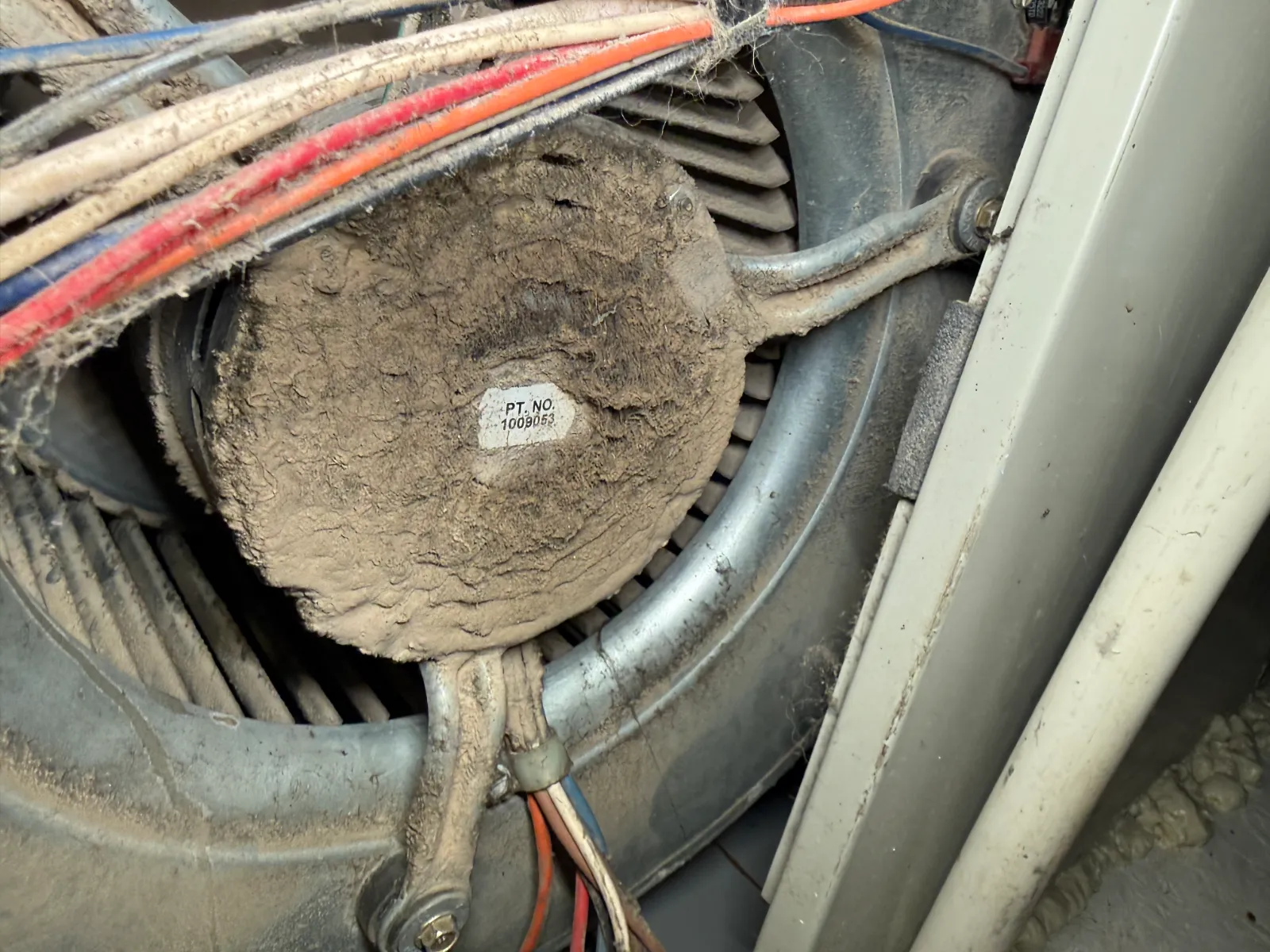
Older furnaces may have a belt between the motor and the blower; as it wears or loosens, it squeals at start-up. Most newer furnaces are direct-drive, so a squeal there usually means motor or blower bearings. Carrier's blower motor page lists grinding, squealing and banging as typical signs of worn bearings or loose components. The inducer motor, the small fan that runs first, can also start to whine as its bearings go.
Rattling
Start simple: is the blower door fully seated, and is anything stored on or leaning against the furnace? A loose access panel, a screw that has backed out, or a duct hanger touching a joist can rattle every cycle. A rattle that clearly comes from inside the cabinet, or from the inducer, needs a technician. Carrier also mentions loose connections in ductwork or panels as a rattling source.
Humming and buzzing
A gentle hum from the inducer and the transformer is normal. A louder hum where the blower should start but doesn't is the classic symptom of a failed capacitor, the part that gives the motor its starting push. Carrier advises against touching a bulging or leaking capacitor; it can store a dangerous charge even with the power off.
Whistling
Whistles come from air squeezing through a small opening. The usual reasons are a filter so dirty the blower is straining, registers closed in unused rooms, a return grille covered by furniture, or a gap in a duct joint. If the filter is fine and every register is open, a pro can test static pressure to find the restriction.
Clicking
One or two clicks at start and stop are relays and the gas valve. Constant clicking with no flame means the furnace keeps trying to light and failing, which usually ends in a lockout and a blinking code. Our guide to furnace flash codes shows how to read it, and the furnace won't turn on guide covers the next checks.
What to check before you call
- 1When does it happen?
At ignition = burners. While the fan runs = blower or ducts.
- 2Record it
Short phone video with sound.
- 3Filter and registers
New filter; open every supply and return.
- 4Panels and clutter
Seat the blower door; clear anything touching the cabinet.
- 5Drain and vents
Check the condensate pump and the outdoor PVC pipes.
- 6Code
Note any flashing LED pattern.
- 7Call
Boom, grind, screech, or hum with no blower.
- Pin down when it happens. At start-up, during the run, at shutdown, or after the furnace stops? Noises at ignition point to burners; noises while the fan runs point to the blower.
- Record it. A 20-second phone video with sound helps a technician more than a description.
- Change the filter and open every supply and return register.
- Seat the blower door and move anything touching the cabinet or ducts.
- On a high-efficiency furnace, look for water around the unit and check that the condensate pump empties.
- Look outside at the white PVC pipes for snow, ice or debris.
- Note any flash code before you turn off power.
Colorado-specific noise causes
- Icy or snow-drifted PVC vents. Partly blocked intake or exhaust pipes can make the inducer labor, cause a fluttering or gurgling sound, and eventually trip the pressure switch. Clear snow by hand after storms, and never cover the pipes.
- Frozen condensate lines. Drain lines through cold garages or attics can freeze during a long subzero stretch. Water then backs up into the trap, and you hear gurgling before the furnace shuts down.
- Hail. A cracked or loose vent cap on the roof or wall can rattle or whistle in wind. Look after a hailstorm.
- Altitude. Burners set up for sea level can light roughly at Denver elevation. If you hear rough ignition or a roaring flame, ask a technician to confirm the furnace was set up for altitude. Our altitude guide explains why.
- Dust and smoke. Dry air and smoky summers load filters faster, and a starving blower is a noisy blower.
When to call a technician
- Any boom or bang at ignition.
- Grinding, screeching or scraping. Turn it off first.
- A hum with no blower movement.
- A noise that started with a flash code, a burning smell, or reduced heat.
- A noise that is getting louder week by week.
MrFixer Heating & Cooling repairs furnaces throughout the Denver metro; see furnace repair or call (720) 466-7983. Loud mechanical noise after hours is a reason to use our emergency HVAC repair service. A yearly tune-up includes burner cleaning and a look at motors and belts, which heads off most noises. If a noisy furnace has you thinking about replacement, the repair cost guide helps with that decision. We serve the whole metro area.
Frequently asked questions
Why does my furnace bang when it turns on?
A bang or boom right as the burners light is usually delayed ignition: gas builds up for a moment before lighting. Dirty burners, a weak igniter or gas pressure problems are typical causes. Turn the heat down and schedule service.
Is it normal for ducts to pop when the heat comes on?
Yes, in most homes. Metal ductwork expands as warm air flows through it and contracts as it cools, which can cause ticking or popping. If it's very loud, a technician can check return airflow and duct supports.
What does a squealing furnace mean?
On older belt-drive furnaces, a worn or loose belt. On most newer furnaces it points to blower or inducer motor bearings. Either way it needs a technician before it turns into a failed motor.
Why is my furnace humming but not blowing air?
The blower motor is getting power but not starting, which is often a failed run capacitor or a seized motor. Turn the furnace off and call; capacitors can hold a shock hazard.
Can a dirty filter make a furnace noisy?
Yes. A clogged filter makes the blower work harder and can cause whistling and a louder rush of air. Replacing it is the first thing to try.
Should I turn off a noisy furnace?
Turn it off for grinding, screeching, a boom at ignition, or any noise with a burning smell. For whistling, light rattles or duct popping, it's usually fine to keep running while you schedule service.
Sources (4)
- carrier.com carrier.com/us/en/residential/hvac-resources/furnaces/troubleshooting-a-furnace/
- carrier.com carrier.com/us/en/residential/hvac-resources/furnaces/furnace-blower-motor/
- xcelenergy.com xcelenergy.com/staticfiles/xe-responsive/Billing%20&%20Payment/Understanding%20Your%20Bill
- www1.eere.energy.gov www1.eere.energy.gov/buildings/publications/pdfs/building_america/highefficiency_gas_furna
We'll measure the house, run a load calculation and give you written prices for each option before any work starts.
Get a Free Estimate or call (720) 466-7983