
Key takeaways
- A furnace that runs nonstop on a −5°F night is usually doing its job. Systems are sized for the local “design temperature” (about 0–5°F across the Denver metro), so below that point they run without stopping and the house can still drift a few degrees.
- The problem is when it falls behind on a 20°F day. That points to a dirty filter, a weak burner, an altitude setup issue, duct leaks or a furnace that was undersized from the start.
- You can check two things safely: the filter and the temperature rise between a return grille and a supply register, measured with a kitchen thermometer.
- Don’t use deep night setbacks during a cold snap. Recovery can take hours when it’s below zero, and a steady setting is easier on the system.
- Gas smell, a CO alarm or a furnace that keeps shutting off means stop troubleshooting and call.
Every winter the Front Range gets a few arctic outbreaks, when highs stay in the single digits and nights fall below zero. Those are the days the phones ring with the same worry: the furnace has been running for hours and the house is still 64°F. Sometimes that is a real failure. Often it is physics. This guide shows how to tell the two apart, what you can check without tools, and what a technician should look at if the furnace really is losing the battle.
Why a healthy furnace can fall behind below zero
Heating systems are not sized for the coldest night on record. A proper load calculation (ACCA Manual J) sizes the system for the 99% winter design temperature: the outdoor temperature that a location stays above about 99% of the hours in a typical winter. ENERGY STAR’s reference table, which uses ASHRAE climate data, lists about 3°F for Denver, 4°F for Arapahoe and Douglas counties, 5°F for Adams and Jefferson and 0°F for Boulder and Weld.
A house loses heat roughly in proportion to the gap between indoor and outdoor temperature. At 40°F outside the gap is about 28 degrees; at −10°F it is almost 80. When the outdoor temperature drops below the design point, the heat loss keeps climbing but the furnace’s output does not. A correctly sized furnace then runs continuously and the indoor temperature settles a little below the thermostat setting. That is expected behavior, not a breakdown.
Two Colorado factors shrink the margin further:
- Altitude. Thin air means less oxygen for combustion, so manufacturers require the gas input to be reduced, commonly around 4% per 1,000 feet. At 5,280 feet that is about a fifth of the nameplate input. Our furnace altitude calculator shows the numbers for your town, and the altitude guide explains why.
- Wind and dry air. Strong winter winds along the Front Range push cold air through every gap in the house, and very dry indoor air feels cooler at the same thermostat reading.
What “not keeping up” really looks like
| What you notice | Likely cause | DIY or pro |
|---|---|---|
| Runs nonstop below about 0°F, house 2–4° under the setting, warm air at the registers | Normal operation past the design temperature | Nothing to fix; keep a steady setting |
| Falls behind on a 15–25°F day | Dirty filter, weak flame, altitude setup, undersized furnace, duct leaks | Filter is DIY; the rest needs a technician |
| Air at the registers is only lukewarm | Low gas input, dirty burners, failing stage on a two-stage furnace | Pro: gas pressure and combustion test |
| Long burner runs that end in shutoffs, error code blinking | Limit switch tripping from poor airflow, or a pressure-switch issue | Check the filter; then call |
| One end of the house cold, the rest fine | Duct design, leaky or crushed ducts, closed registers | Open registers DIY; duct fixes pro (see our uneven-heating guide) |
| Heat pump home: cool air, aux heat light on a lot | Heat pump capacity drops in deep cold; aux or furnace backup carrying the load | Usually normal; check that backup heat works |
Step-by-step checks you can do safely
- 1Thermostat
Mode HEAT, fan AUTO, a steady setting, fresh batteries.
- 2Filter
Replace it if it’s gray or you can’t see light through it.
- 3Registers and returns
Open, unblocked, interior doors open.
- 4Outdoor PVC vents
Clear snow and ice by hand; keep a 2-ft clear zone.
- 5Temperature rise
Return vs. nearest supply after 15 minutes; compare to the plate.
- 6Error code
Write down the LED blink pattern before cycling power.
- 7Call
Gas pressure, combustion, blower and duct checks need a technician.
The temperature-rise check
Every gas furnace’s rating plate lists an air temperature rise range, for example 35–65°F. It is the difference between the air coming back to the furnace and the air leaving it. You can estimate it with an ordinary cooking thermometer:
- Let the furnace run for at least 10–15 minutes.
- Hold the thermometer against the return grille (the big one that pulls air in) and write down the reading.
- Do the same at the supply register closest to the furnace.
- Subtract. A result inside the plate’s range means the furnace is making heat normally. A rise near the bottom of the range, or below it, suggests the furnace is short on gas input or combustion. A rise above the range suggests poor airflow: filter, blower or ducts.
This is a rough check, not a diagnosis, but it tells a technician a lot before they arrive. Never remove burner covers or reach into the cabinet to measure.
Settings that help during a cold snap
- Pick a temperature and leave it. A 10-degree overnight setback that recovers easily in November can take most of the morning at −10°F. During an arctic outbreak, a steady setting of about 68°F (the figure Xcel Energy suggests for saving energy) is easier on the furnace and on your bill.
- Fan on AUTO. With the fan set to ON, air keeps moving between burner cycles and feels cool at the registers.
- Keep registers and returns open and clear. Furniture, rugs and closed doors starve the system of air.
- Use the sun. Open south and west blinds during the day and close everything at night. At Colorado’s elevation the winter sun is strong enough to matter.
- Check the outdoor vents. High-efficiency furnaces breathe through white PVC pipes. Xcel Energy also asks customers to clear snow and ice from gas meters and appliance vents gently, by hand.
Colorado specifics
Altitude setup on older or moved furnaces
A furnace that was never converted for altitude can over-fire, and one that was converted incorrectly can under-fire and feel weak on the coldest days. If your furnace was installed by a previous owner or you don’t know its history, ask for a gas-pressure and combustion check at the next tune-up.
Snow-blocked PVC vents
Drifting snow can cover low sidewall intake and exhaust pipes. The furnace’s pressure switch then stops the burners for safety, and the burners keep stopping before the rooms warm up. Clear the pipes by hand and keep a two-foot clear zone around them. If the furnace still won’t stay lit, see furnace blowing cold air.
Wind-driven leakage
Many 1970s–1990s homes in the metro have leaky rim joists, attic hatches and can lights. On windy, frigid nights that leakage can add more heat loss than the walls. Weatherstripping and sealing are cheaper than a bigger furnace.
Heat pumps and dual-fuel systems
Air-source heat pumps lose capacity as it gets colder, and cold-climate models are designed to keep producing heat well below zero. In deep cold it is normal for auxiliary heat or the gas furnace in a dual-fuel system to take over. If the house won’t warm up even with backup heat, the backup itself may have failed. More in Do heat pumps work in a Denver winter?
When it’s more than the weather
A furnace that falls behind in moderate weather, or one that couldn’t keep up during the last cold snap and the one before, deserves a real diagnosis. A technician should measure gas pressure and temperature rise, inspect the burners and flame sensor, check blower speed and static pressure, look at the venting and, if the numbers don’t add up, run a heat-loss calculation. Sometimes the answer is a cleaning; sometimes it is duct sealing; occasionally it is a furnace that was undersized on day one.
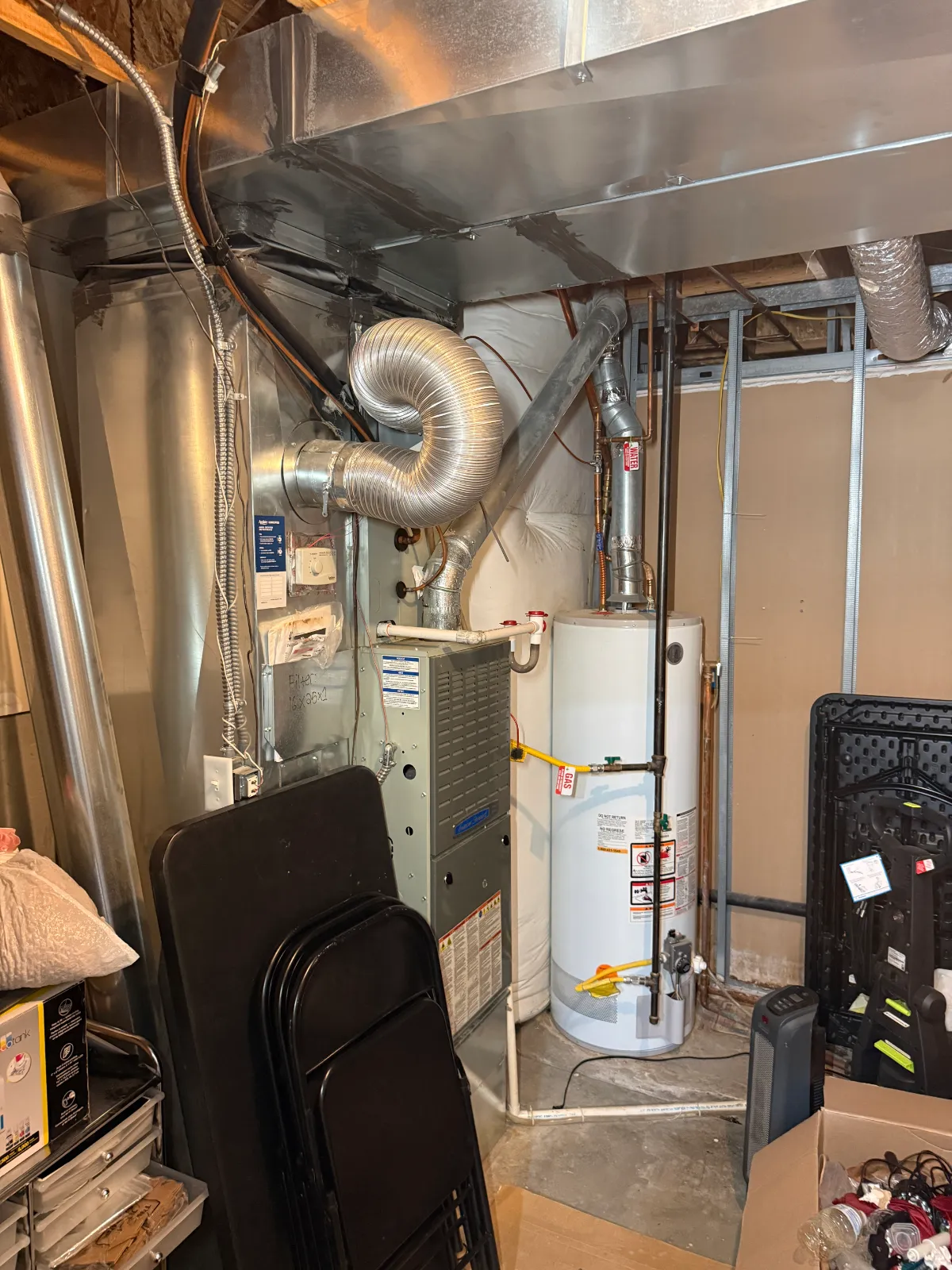
If the furnace is near the end of its life, use our HVAC age decoder to see how old it is, and the repair-or-replace calculator before committing to a big repair. Typical market costs are covered in furnace repair cost in Denver.
When to call
- The house is losing more than a degree or two per hour while the furnace runs.
- The temperature rise is outside the plate’s range.
- The furnace short-cycles, shows an error code or shuts down on a limit.
- Indoor temperature is falling toward 55°F, the point where pipe-freeze risk climbs.
- Gas odor or a CO alarm: get out first, phone from outside.
MrFixer Heating & Cooling handles furnace repair and emergency heating calls anywhere in the Denver metro: (720) 466-7983.
Sources (5)
- energystar.gov energystar.gov/sites/default/files/asset/document/Design%20Temperature%20Limit%20Reference
- achrnews.com achrnews.com/articles/136057-furnaces-must-be-modified-for-high-altitude-applications
- longmontleader.com longmontleader.com/local-news/cold-weather-and-snow-moving-into-colorado-8089235
- denver7.com denver7.com/weather/denvers-coldest-temperatures-ever-recorded-and-other-cold-weather-stat
- energystar.gov energystar.gov/saveathome/heating-cooling/duct-sealing
We'll measure the house, run a load calculation and give you written prices for each option before any work starts.
Get a Free Estimate or call (720) 466-7983