
Key takeaways
- Long run times are normal for modern heat pumps. Variable-speed (inverter) models are designed to run for hours at low speed instead of blasting on and off.
- Runtime climbs as it gets colder. On a 10°F day, near-continuous running is expected; below a cold-climate unit’s rated range, backup heat helps.
- Not normal: the house falling behind on a 35°F day, an outdoor coil encased in ice that never clears, aux heat running constantly in mild weather, or a sudden jump in your electric bill.
- Thermostat settings matter: big setbacks and the wrong system type can make backup heat do the work.
- Check the filter, the outdoor unit and the thermostat first; refrigerant, defrost and sensor problems need a technician.
New heat pump owners who grew up with gas furnaces often worry the first cold week: it never shuts off. A furnace runs hot and short; a heat pump runs warm and long. That’s by design, and it’s usually how the system saves money. But constant running can also be the first sign of a real problem. Here’s how to tell the difference in a Colorado winter.
Why a heat pump runs so long
Older single-speed heat pumps switched fully on and off and, as Mitsubishi notes, older and single-stage designs struggled to hold temperature once it dropped below about 40°F. Inverter heat pumps change compressor speed to match the heat the house is losing. In mild weather they idle along at low speed; as the temperature falls they speed up and run longer. Running steadily at part speed is more efficient and more comfortable than cycling at full blast.
Cold-climate models push that range a long way. Mitsubishi’s Hyper-Heating line, for example, is advertised as keeping its full rated output at 5°F and still operating at −13°F. Below the point where the heat pump alone can match the house’s heat loss, the furnace in a dual-fuel system or electric backup strips take part of the load.
Normal or not?
| What you notice | Likely cause | DIY or pro |
|---|---|---|
| Runs nearly nonstop below about 20°F, house at setpoint | Normal inverter operation | Nothing to fix |
| Short pauses with steam from the outdoor unit | Normal defrost cycle | Nothing to fix |
| Runs constantly and the house falls behind at 30–40°F | Dirty filter, low refrigerant, failing sensor or undersized system | Filter DIY; the rest pro |
| “Aux heat” on most of the day in mild weather | Large setbacks, wrong thermostat setup, low charge or defrost fault | Check settings; then pro |
| Outdoor coil stays solid ice for hours | Defrost control or sensor failure, blocked drainage, low charge | Pro (see heat pump covered in ice) |
| Electric bill much higher than last winter in similar weather | Backup heat doing too much of the work | Check thermostat runtime reports; then pro |
Step-by-step checks
- 1Is the house at setpoint?
If yes and it’s below about 20°F, long runtime is normal.
- 2Filter
Replace or clean it; check indoor registers and returns.
- 3Thermostat
Heat pump mode, small setbacks, emergency heat off.
- 4Outdoor unit
Clear snow around it gently; make sure it isn’t buried or encased in ice.
- 5Runtime report
Compare heat pump vs. aux hours on your smart thermostat.
- 6Call
Charge, defrost, sensors, airflow and backup heat need a technician.
Use your thermostat’s runtime report
Many smart thermostats show daily heat pump and auxiliary heat hours. A few hours of aux on the coldest days is normal for many systems. Aux heat on mild days, or aux hours that look like the compressor’s, mean the system isn’t heating the way it should.
Thermostat settings that keep aux heat in check
- Set the thermostat’s equipment type to heat pump (and dual fuel, if you have a furnace).
- Use small setbacks, 2–3°F, or none; see winter thermostat settings.
- Avoid “emergency heat” unless the outdoor unit has failed or your manual calls for it, such as after a long power outage.
- On dual-fuel systems, ask your technician to review the outdoor switch-over temperature.
Colorado specifics
Snow, ice and placement
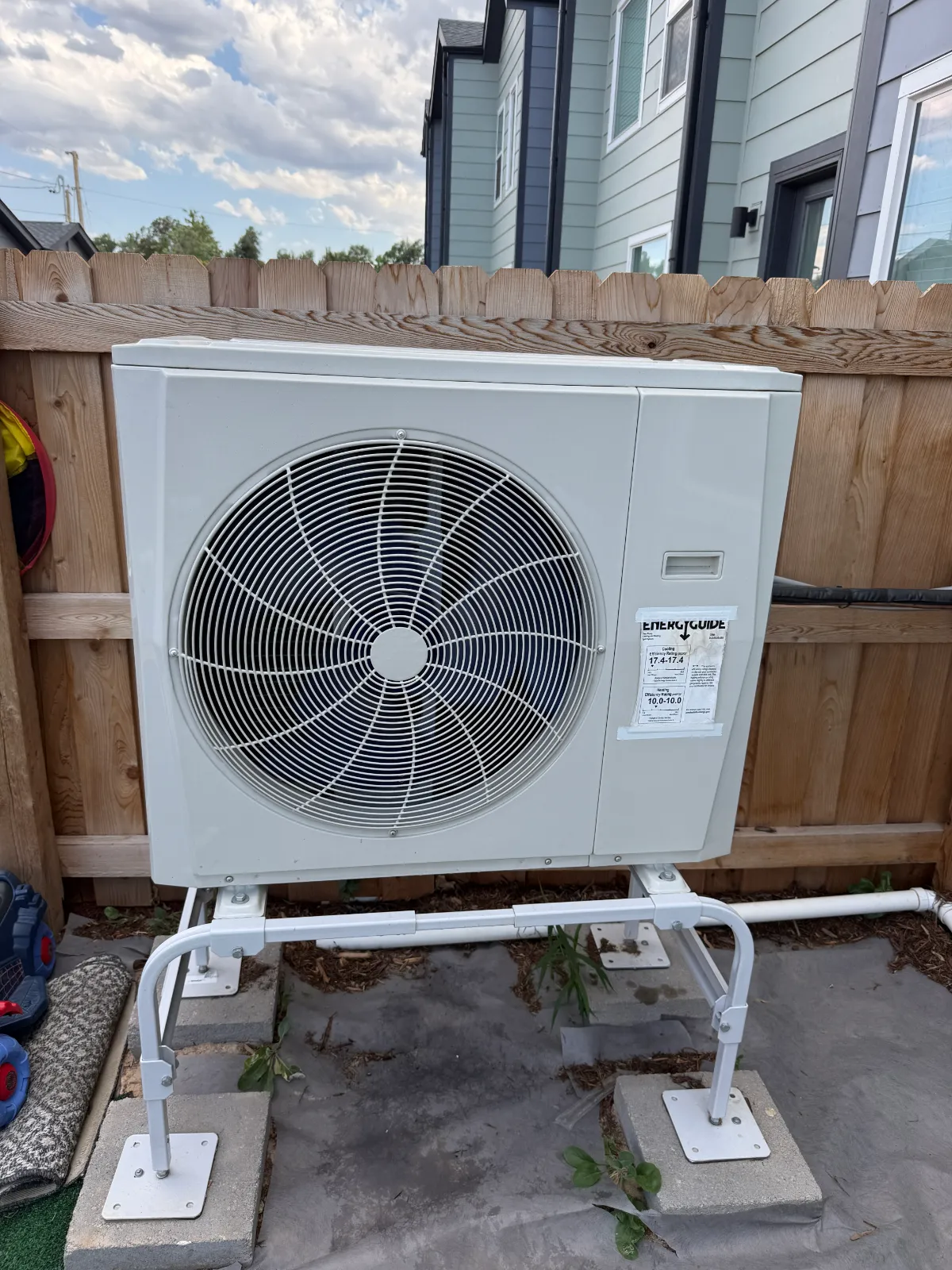
Drifting snow can bury a low outdoor unit, and defrost meltwater that can’t drain refreezes under the coil. Units on stands or wall brackets above the snow line, with clear drainage, run better and defrost faster.
Wind and sun
Strong winds increase a house’s heat loss and can blow snow into the coil. On sunny days the load drops sharply, so you may notice the system slow down at midday and work harder after sunset.
Time-of-use rates
If you’re on Xcel’s time-of-use plan, nudging the temperature up a degree in mid-afternoon and letting the house coast through the evening peak hours can cut costs without reducing comfort.
Problems that need a technician
Constant running with poor heat often comes down to refrigerant charge, airflow or controls. DOE notes that split systems are charged on site and an incorrect charge reduces efficiency, and that systems should be leak-checked at every service visit. A technician should measure pressures and temperatures, check the defrost board and sensors, verify indoor airflow and look at the backup heat and its controls. If the system has struggled since day one, sizing may be the issue; see heat pump sizing at altitude.
MrFixer services all major heat pump and mini-split brands across the Denver metro. Book heat pump repair or mini-split repair at (720) 466-7983, and see heat pump blowing cold air if the air itself feels cold.
Sources (4)
- mitsubishicomfort.com mitsubishicomfort.com/articles/mythbusters-heat-pumps-for-extreme-cold-climates
- energy.gov energy.gov/energysaver/air-source-heat-pumps
- cpr.org cpr.org/2025/02/21/xcel-is-changing-when-it-charges-more-for-peak-time-energy-use
- manuals.online manuals.online/allied/heat-pump/ml14xp1/user-manual/yjqp
We'll measure the house, run a load calculation and give you written prices for each option before any work starts.
Get a Free Estimate or call (720) 466-7983