
Key takeaways
- Rotten eggs, sulfur or skunk near a gas appliance means treat it as a gas leak: get out first, and once outside phone 911 and then Xcel's gas emergency line, 1-800-895-2999.
- A dusty, toasty smell on the first few cycles of the season is normal. Trane says it typically fades in about 10 minutes.
- Hot plastic, melting rubber or an electrical smell is not normal. Switch the furnace off and call.
- Carbon monoxide has no smell. A CO alarm, not your nose, is the protection. A sharp exhaust or fuel odor indoors can mean venting trouble that may also be releasing CO.
- Musty or sewer smells are usually a filter, humidifier, condensate or dried-out floor drain problem, and often easy to fix.
Your nose is a good early-warning system for a furnace. Most odors fall into one of three groups: harmless start-up smells, nuisance smells that point to maintenance, and danger smells that mean you stop and get help. This guide sorts them out and tells you what to do for each.
Is it safe? When to shut it off
- Gas (rotten egg, sulfur, skunk): don't turn lights, the thermostat or appliances on or off, and don't use your phone inside. Get everyone out and away from the house. Xcel Energy's safety notice says to call 911 first, then Xcel at 1-800-895-2999, once you are safe.
- CO alarm, or headaches, dizziness, nausea or unusual fatigue in more than one person: CPSC lists these as flu-like signs of carbon monoxide poisoning. Get to fresh air and call 911. See our CO safety guide.
- Burning plastic, hot wiring, or smoke: turn the furnace off at the thermostat and the service switch or breaker. If you see smoke or flames, get out and call 911.
- Exhaust or fuel smell indoors that doesn't clear: turn the furnace off and have the venting checked before using it again.
Don't open the burner compartment, try to locate a gas leak with a flame, or keep running a furnace that smells hot.
Furnace smells: likely cause and what to do
| What you notice | Likely cause | DIY or pro |
|---|---|---|
| Rotten eggs, sulfur, skunk | Natural gas leak (the odorant added to gas) | Leave and call 911 and the gas utility |
| Dusty, toasty smell on the first cold day | Dust burning off the heat exchanger or burners | Normal; open a window and let it pass |
| Hot plastic, rubber or electrical odor | Overheating motor, failing wiring, or a part touching something hot | Pro. Turn it off now |
| Sharp, eye-stinging exhaust or fuel smell | Flue gases spilling indoors: blocked, disconnected or poorly drafting vent | Pro. Turn it off; have CO checked |
| Musty, damp or moldy smell | Dirty filter, wet humidifier pad, standing water in drain pan or ducts | DIY filter and humidifier pad; pro for drains and ducts |
| Sewer smell near the furnace | Dry floor drain trap or a condensate line draining into an empty trap | DIY to refill the trap; pro if it persists |
| Smoky, campfire smell | Outdoor wildfire or wood smoke pulled in, or a chimney back-draft | Check outside; pro if it comes from the furnace |
| Chemical or "new car" smell from a new furnace | Coatings and oils burning off | Normal for the first hours; call the installer if it lasts |
| Dead-animal smell from registers | Rodent in ducts or the return | Pro or pest control |
Gas and rotten eggs
Natural gas has no smell of its own. Utilities add an odorant so you notice leaks. Xcel's safety data sheet describes the result as a strong sulfur smell, like skunk spray or rotten eggs. The same sheet warns that you can't count on your nose alone: colds, allergies, and getting used to a smell can all dull it, and new piping or certain soils can absorb some of the odorant. If anyone in the house smells it, act on it.
Once Xcel or the fire department has made the house safe, a technician should check the furnace's gas connection and valve before the heat goes back on.
Burning dust: the normal first-day smell
All summer, dust settles on the heat exchanger and burners. The first few times the furnace runs, it burns off. Trane says the smell usually fades within about 10 minutes, and that a burning odor lasting over an hour despite troubleshooting deserves a professional. MrCool's support team describes the same thing for furnaces: it shows up during the first few heating cycles of the season and goes away on its own. Replace the filter before the season starts and you'll shorten it.
Electrical, plastic or rubber burning
This is different from dust: sharper, chemical, and it keeps coming back or gets stronger. Possible causes include a blower motor overheating, wiring insulation breaking down, or something like a plastic toy or bag resting against the cabinet or a register. Trane's advice for a burning electrical odor is to turn the unit off immediately and get a licensed professional. Our furnace repair technicians start with the motor, the control board and wiring.
Exhaust smells and carbon monoxide
CO itself is invisible and odorless, so a sharp exhaust or fuel smell isn't CO. But it can mean combustion gases are coming into the house instead of going up the vent, and CO travels with them. Causes include a disconnected vent pipe, a blocked chimney or PVC exhaust, a cracked heat exchanger, or a furnace that is burning poorly. Turn the furnace off, open windows, and have it inspected. CPSC recommends a CO alarm outside each sleeping area. If you don't have them, our carbon monoxide safety check includes alarm advice.
Musty, damp and sewer smells
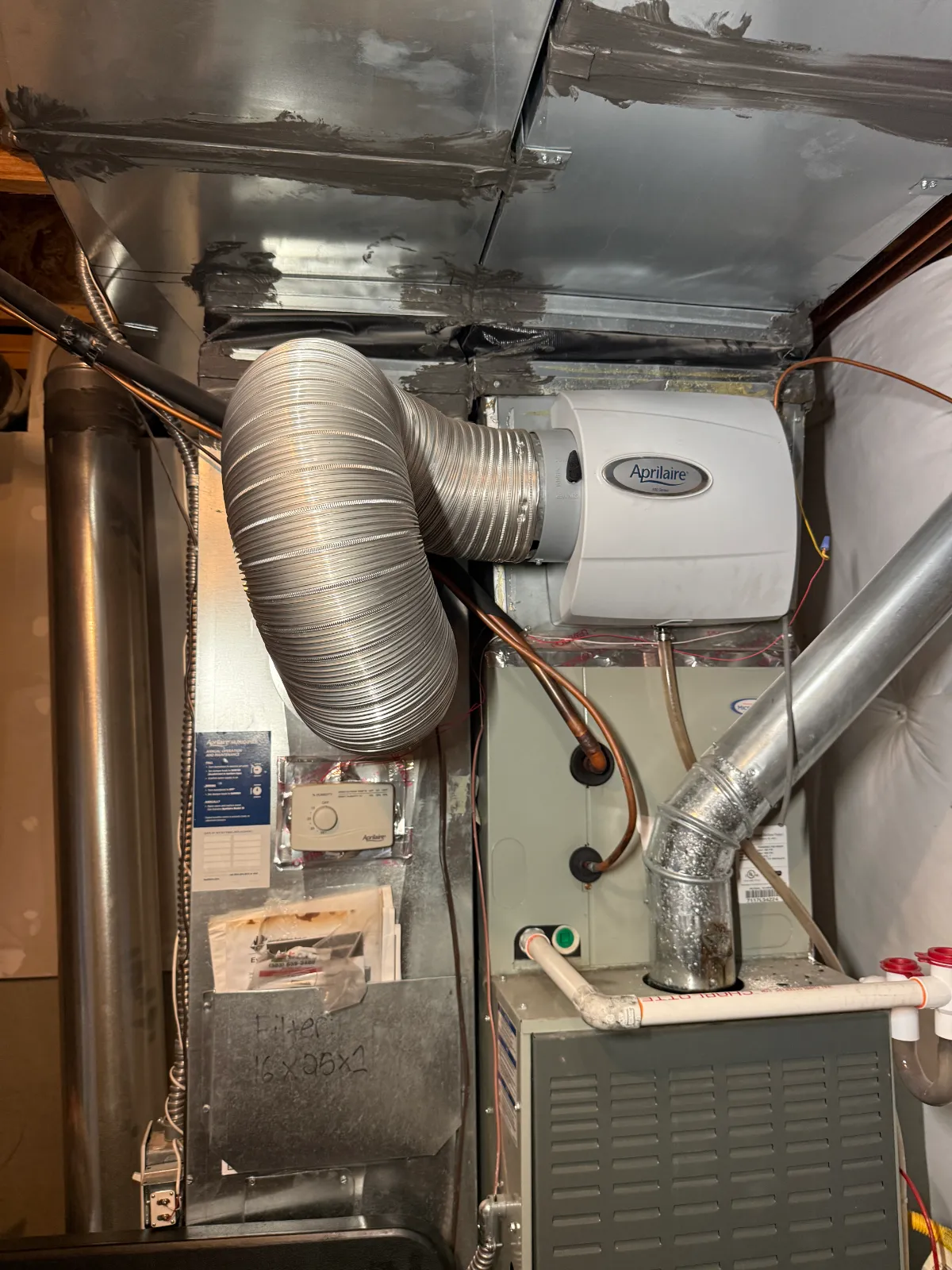
A musty smell when the blower runs usually means something is damp. Check the filter first, then a furnace-mounted humidifier if you have one: the pad can grow mildew and should be replaced each season. On a high-efficiency furnace, a clogged condensate trap can leave standing water. A sewer smell near the furnace often comes from a floor drain whose trap has dried out; pouring a quart of water into the drain refills the seal.
Step-by-step: sniff test and next steps
- 1Gas or rotten egg?
Leave, then call 911 and Xcel at 1-800-895-2999 from outside.
- 2CO alarm or symptoms?
Fresh air, call 911.
- 3Electrical or plastic?
Turn the furnace off at the switch and breaker; call.
- 4Dusty, first day?
Normal. Ventilate; it should fade within minutes.
- 5Musty?
New filter, new humidifier pad, look for standing water.
- 6Sewer?
Refill dry floor drains with water.
- 7Still there?
Schedule service and describe when the smell appears.
Colorado specifics
- Dry air dries out drain traps. Low indoor humidity in winter evaporates the water seal in rarely used floor drains, letting sewer gas into the basement. Topping them up monthly helps.
- Humidifiers are common here because the air is so dry, and a neglected humidifier pad is one of the top sources of musty furnace smells.
- Wildfire smoke can drift in from fires hundreds of miles away. If the smoke smell is in the whole house and outside, it isn't the furnace. Keep windows closed and use a good filter; our filter replacement page covers ratings.
- Snow-blocked PVC vents and altitude. A partly blocked exhaust, or a furnace never adjusted for elevation, can burn poorly and produce more CO. Clear the white pipes by hand after storms and read our altitude guide.
- Mice in the fall. When the weather turns, rodents move into garages and crawlspaces, and a dead-animal smell through the registers is a common late-fall call.
When to call
- Any burning smell that lasts more than about an hour, or comes back every cycle.
- Any electrical, plastic or rubber odor.
- Exhaust or fuel smell indoors, or a CO alarm that has gone off even once.
- A musty smell that a new filter and humidifier pad don't fix.
- After any gas leak call, before relighting the furnace.
MrFixer Heating & Cooling serves the Denver metro with emergency HVAC repair at (720) 466-7983. A seasonal tune-up includes cleaning the burners and checking venting, which cuts down on both the first-day smell and the dangerous ones. If the repair estimate surprises you, our furnace repair cost guide covers when to fix and when to replace.
Frequently asked questions
Is it normal for a furnace to smell like burning when you first turn it on?
Yes. Dust that settled on the heat exchanger over the summer burns off during the first few cycles. Trane says it usually fades in about 10 minutes. If it lasts over an hour or smells like plastic or wiring, turn the furnace off and call.
What does a gas leak from a furnace smell like?
Like rotten eggs, sulfur or skunk. That is the odorant added to natural gas. Leave the house without flipping switches, then dial 911 and Xcel's emergency number, 1-800-895-2999.
Can you smell carbon monoxide from a furnace?
No. CO is odorless. An exhaust or fuel smell can mean flue gases are leaking indoors, and CO may be with them, but only a CO alarm can tell you CO is present.
Why does my furnace smell musty?
Usually a dirty filter, a mildewed humidifier pad, or standing water in a condensate trap or drain pan. Replace the filter and humidifier pad first, then have the drain checked.
Why do I smell sewer gas near my furnace?
Often a floor drain whose water seal has dried out, which happens quickly in Colorado's dry winter air. Pour water into the drain. If the smell stays, have the drain and the furnace's condensate line checked.
Should I turn off my furnace if it smells like burning plastic?
Yes. Turn it off at the thermostat and the service switch and call a technician. Burning plastic or electrical smells can mean an overheating motor or failing wiring.
Sources (5)
- xcelenergy.com xcelenergy.com/staticfiles/xe-responsive/Billing%20&%20Payment/Understanding%20Your%20Bill
- xcelenergy.com xcelenergy.com/staticfiles/xe/Corporate/Corporate%20PDFs/Xcel%20Energy%20Natural%20Gas%20M
- trane.com trane.com/residential/en/resources/blog/does-your-heat-smell-like-its-burning/
- support.mrcool.com support.mrcool.com/hc/en-us/articles/30634855248148-Why-You-Smell-Odors-When-Starting-Your
- webarchive.library.unt.edu webarchive.library.unt.edu/eot2008/20080916033753/http://www.cpsc.gov/cpscpub/pubs/466.htm
We'll measure the house, run a load calculation and give you written prices for each option before any work starts.
Get a Free Estimate or call (720) 466-7983